

Free written scope consultation - allowances, timeline, and change-order rules on paper before a single trade is scheduled
Quikrete Windows & Doors: The West Covina Owner’s Guide
Quikrete isn’t a window or door manufacturer. Quikrete makes concrete, mortar, stucco, and the anchoring products that hold windows and doors in place. If you’re holding a product stamped “Quikrete” and standing next to a window or door opening in West Covina, you’re almost certainly dealing with failed concrete anchoring, a cracked stucco reveal, or a threshold bed that has crumbled.
Our crews in West Covina handle this exact repair weekly. Typically what happens: a homeowner pulls off a rotted door sweep or an old window flange, finds the concrete underneath has spalled or cracked, and realizes the whole opening needs to be re-bedded before any new unit goes in. Installed repair work around a window or door opening runs roughly $400 to $2,500 depending on the size of the failed area and whether the unit itself has to come out. We stock Quikrete anchoring cement, hydraulic water-stop cement, stucco patch, and concrete bonding adhesive on our trucks specifically for these repairs.
Which Quikrete Products This Applies To
Most of the failures we see around West Covina windows and doors trace back to one of three Quikrete product families. Knowing which one was used tells us a lot about what went wrong and what the repair looks like.
- Quikrete FastSet Anchoring Cement – the pourable mix used to set anchor bolts, door thresholds, and steel door frames into concrete or block. It expands slightly as it cures, which is good. But in Southern California’s dry climate it can cure before it fully bonds if the installer didn’t wet the substrate first.
- Quikrete Hydraulic Water-Stop Cement – used around basement window wells, below-grade door frames, and any opening where water tries to get in. It sets in 3 to 5 minutes. That speed is the point, but it also means a rushed mix leaves voids.
- Quikrete Stucco Patch and Repair Mix – the cosmetic finish around window and door reveals. Around West Covina, the big enemy here is thermal movement. Stucco doesn’t flex; wood frames do. Hairline cracks at the corners of openings are the tell.
The compatibility gotcha we see over and over: FastSet Anchoring Cement is not a structural replacement for grout under a load-bearing door threshold. It’s a mechanical anchor, not a bed mortar. If a previous installer used 40 pounds of anchoring cement to fill a 2-inch-deep threshold void, that bed will crack along the edges within a few seasons. The correct fix is a sand mix or a polymer-modified structural repair, with the FastSet reserved for the actual anchor points. We stock both on the truck so the repair gets done once.
Styles & brands we work with
Signs Your Quikrete Window or Door Opening Is Failing
These are the five symptoms we see most in West Covina, in rough order of frequency:
- Hairline cracks at the upper corners of window or door openings. This is thermal movement in the frame transferring to the stucco or patching compound. The fix is often simple: open the crack with a grinder, fill with a polymer-modified patch, and repaint. If you just caulk it, it returns within a year.
- A door threshold that rocks or sounds hollow when you step on it. The original bed mortar has crumbled underneath. The threshold’s anchor bolts are now the only thing holding it. Every step flexes those bolts until they snap. This one is a safety issue, not just a nuisance.
- White, chalky powder leaching from below a window sill. Efflorescence. Water is getting into the concrete or stucco, dissolving salts, and depositing them on the surface. It means the moisture barrier has failed somewhere and the opening needs to be sealed from the outside.
- An exterior door frame that has shifted enough to make the deadbolt bind. FastSet or anchoring cement has degraded, or was never properly mixed against the rough opening. The frame is walking. You can shim it temporarily, but the real fix is re-anchoring the frame with fresh material.
- Crumbling, sandy edges at the base of a window frame. Spalling. Southern California’s wet winters followed by long dry summers are hard on concrete that was mixed too wet or poured too thin. The surface layer breaks down until the ledge no longer supports the frame.
See the difference
 Before
 After
After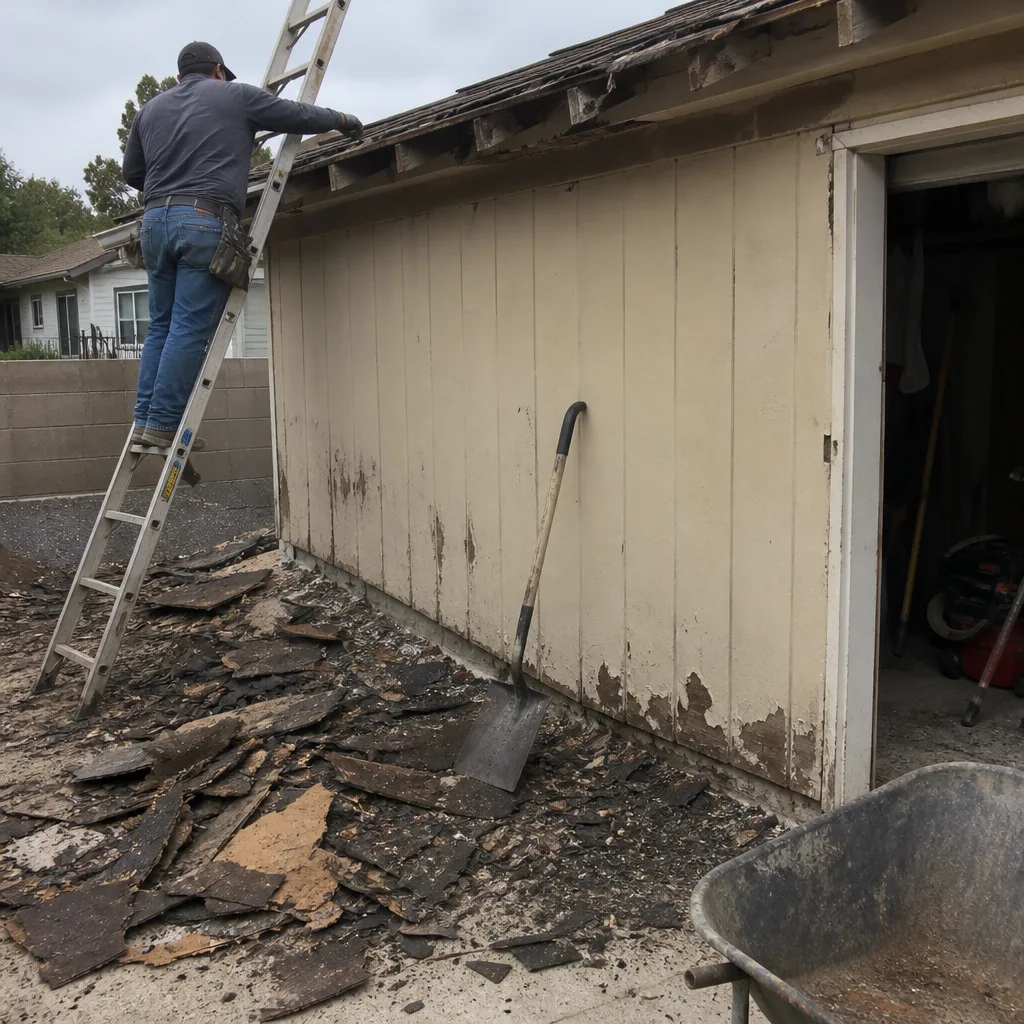 Before
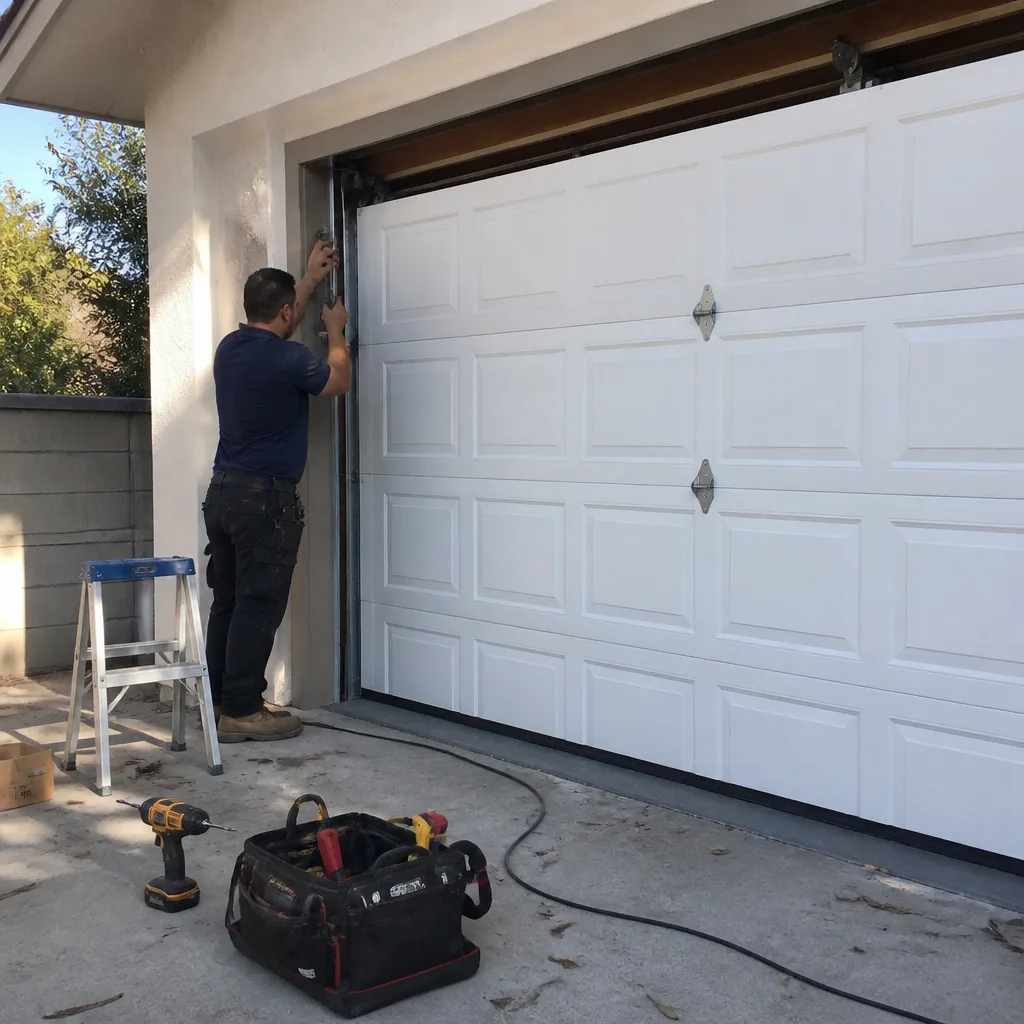 After
After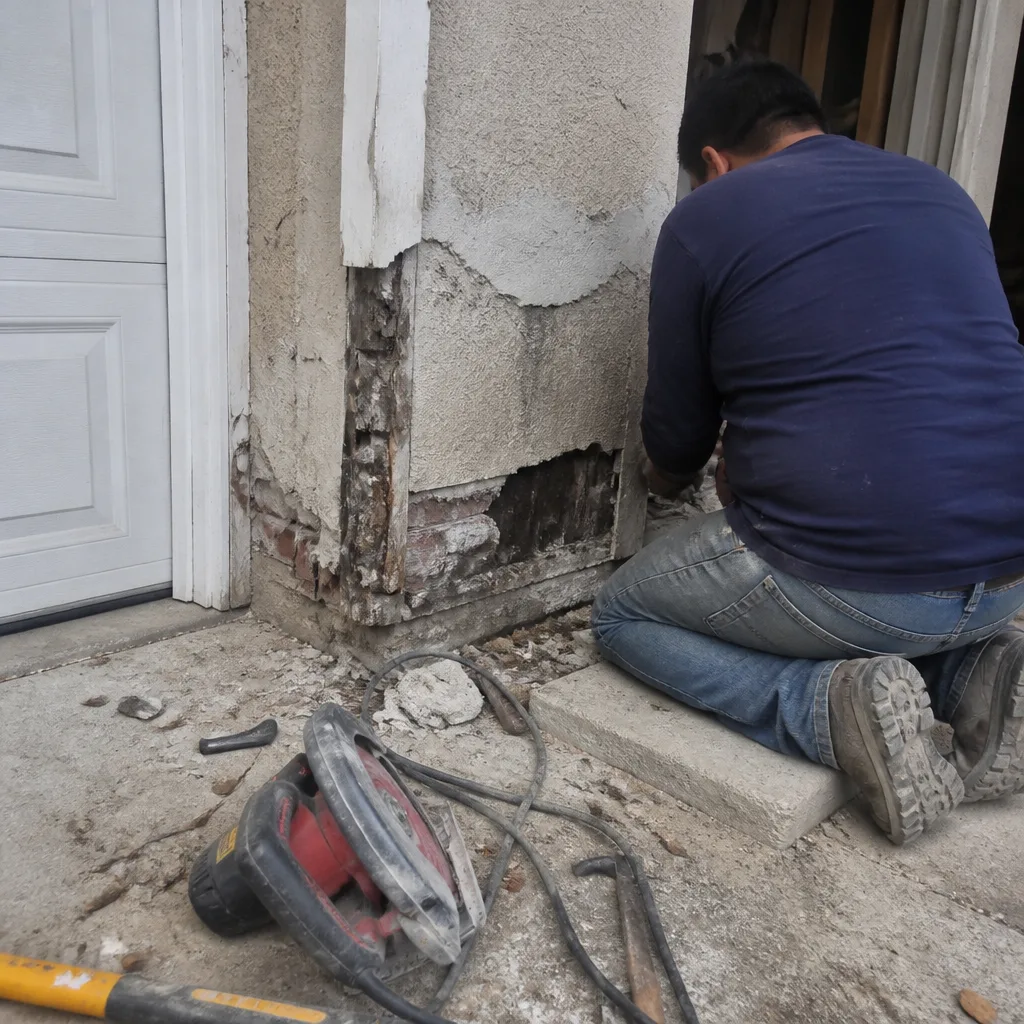 Before
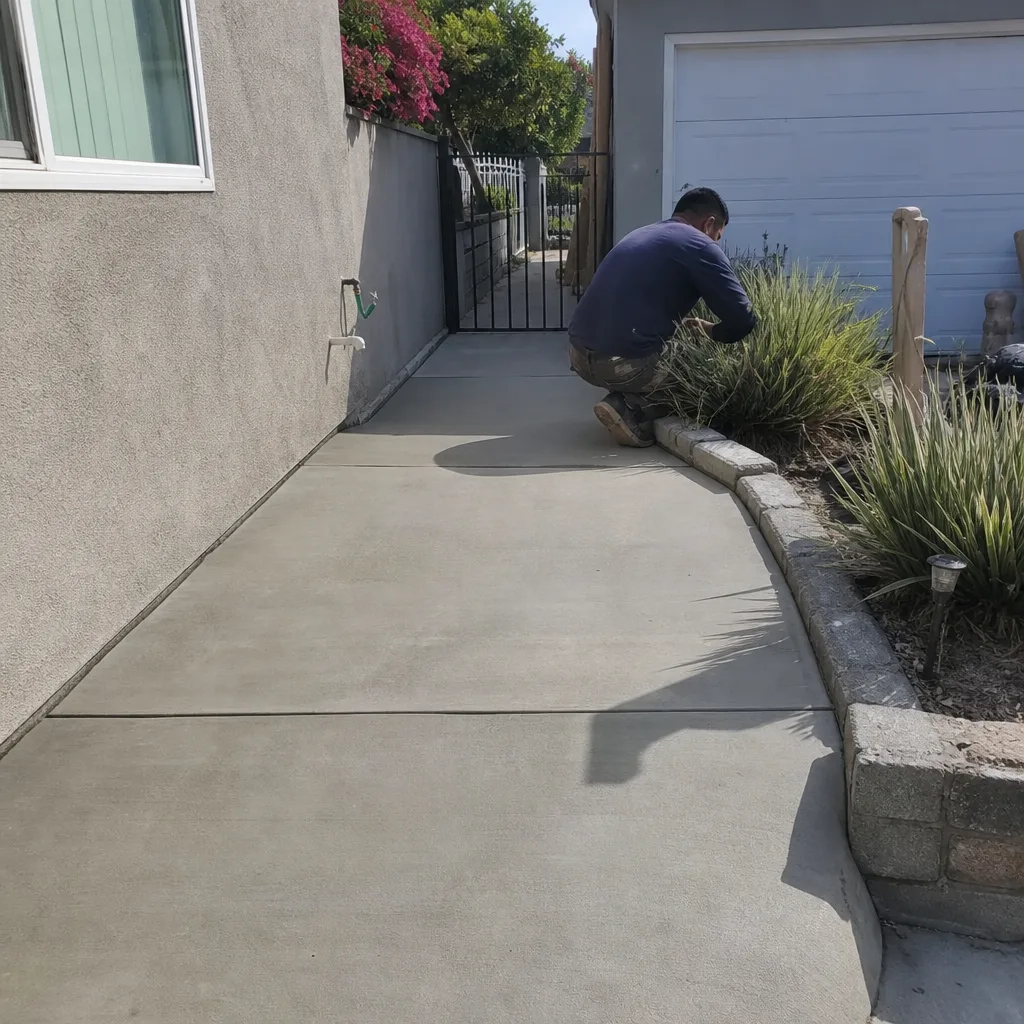 After
AfterReplacement Cost & What’s Included
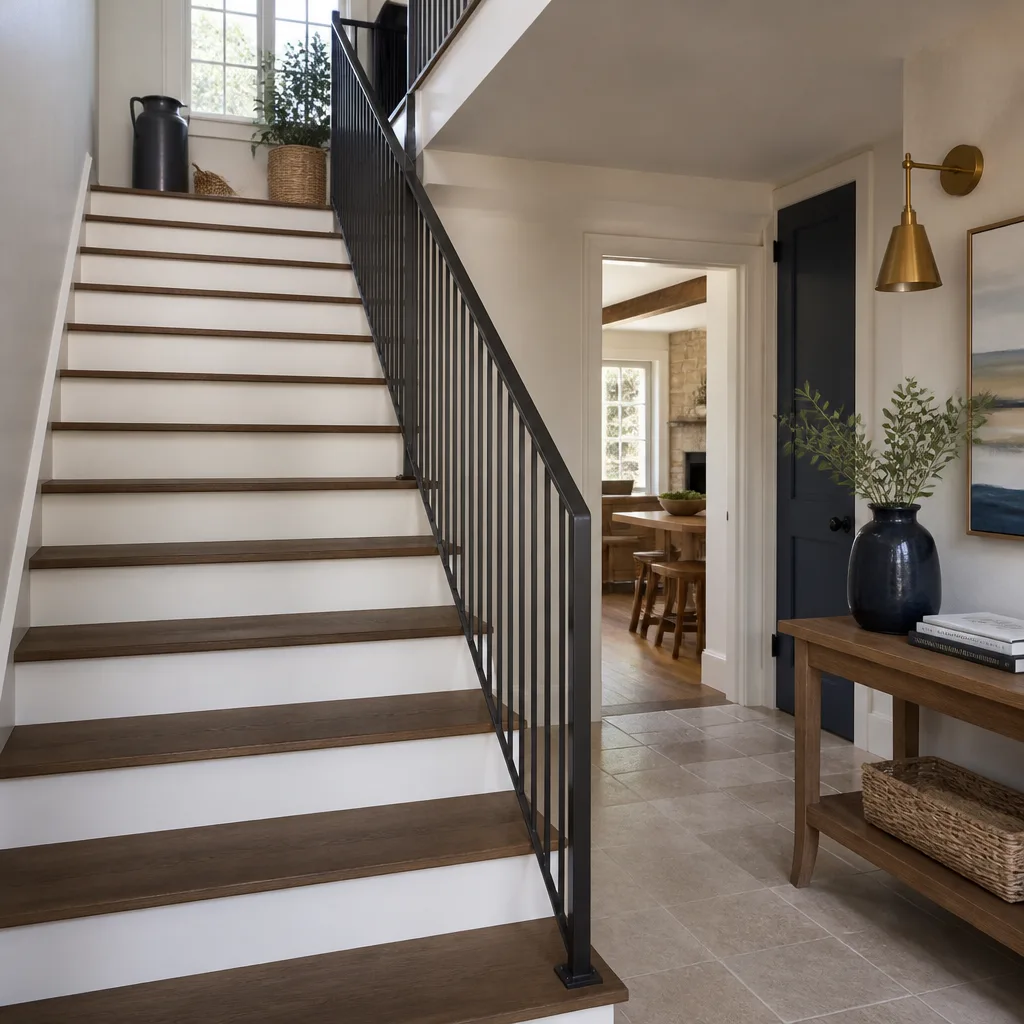
Re-bidding, re-anchoring, and re-finishing a failed Quikrete area around a window or door in West Covina runs $400 to $1,800 in most cases. If the window or door unit itself has to come out for the substrate to be properly repaired, you’re looking at $1,500 to $2,500 all-in. The range depends on three things: the size of the failed area, whether the unit stays in place or gets pulled, and whether any water damage has spread into the wall cavity.
Every repair we price in West Covina includes the same things: removal of failed material, proper surface preparation with a bonding agent, new Quikrete-compatible material matched to the application, and finishing that blends with the existing surface. The written price covers parts, labor, cleanup, and any necessary permits. If the number changes before work starts, you see it on a written change order before anyone picks up a tool. The 365-Day Done Right Promise applies to this work exactly like any other: if the patch fails within a year, we come back and fix it. No argument.
DIY or Call Us?
Some of this work is genuinely approachable for a careful homeowner. Small stucco corner cracks? You can chase those with a grinder and patch them in an afternoon. The $20 you save on labor gets spent on the bonding agent and a decent trowel, but the work is manageable.
Here’s where DIY goes wrong: anything that involves resetting a door threshold or re-anchoring a frame under load. The danger isn’t the concrete, it’s the door. A door frame that comes loose while the door is hung sets up a situation where a heavy slab can swing uncontrolled. If the threshold work involves anchor bolts drilled into a post-tensioned slab, you can’t drill safely without consulting a professional. That’s not a scare tactic; it’s the reality of West Covina slab construction. Fixing a rocking threshold on a post-tension slab without knowing where the cables run can turn a $700 repair into a $9,000 slab problem. If you’re unsure, call (341) 217-4204 and describe what you’re seeing. We’ll tell you honestly whether it’s a DIY weekend or a professionals-only job.
FAQs
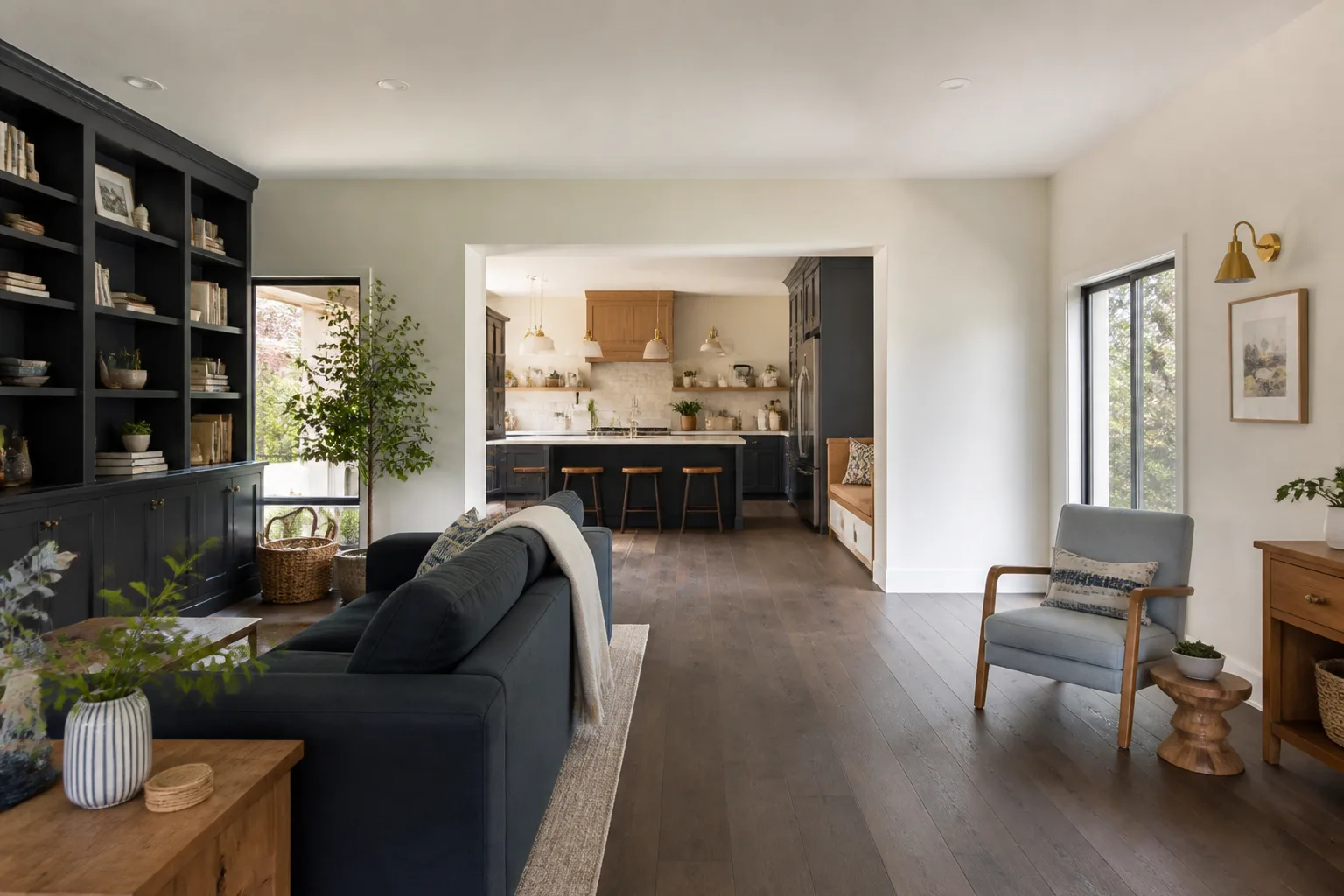
The concrete anchoring work itself should last 20 to 40 years. The weak points are the sealant joints, which have a real-world lifespan of 6 to 10 years in Southern California’s UV exposure. The opening doesn’t fail all at once; the caulk fails first, then water gets behind it, and then the concrete starts to degrade.
Yes, in most cases. If the failed area is localized, we can grind out the loose material, apply a bonding agent, and patch it with a compatible Quikrete mix. Full removal is only necessary when the damage extends under the window or door frame itself. Call (341) 217-4204 and we’ll give you an honest read.
Most window or door opening repairs around West Covina take one full day. That includes removal, preparation, patching, and the initial finish. You may need a second short visit for final paint texture or sealant after the material has fully cured.
Yes. Our trucks carry FastSet Anchoring Cement, Hydraulic Water-Stop Cement, stucco repair mix, and bonding adhesive as standard inventory. For less common Quikrete products we source it same-day from local West Covina suppliers. Estimates are free, so the worst case is you know exactly what it costs even if you don’t hire us.
Good work shows. Bad work shows up later. If you’re standing in front of a cracked or crumbled window or door opening in West Covina, call (341) 217-4204 and we’ll put a price in writing before any work starts.
Written by Luca Romano, Owner, Sawyer Remodel West Covina at Sawyer Remodel West Covina, serving West Covina and nearby areas.