Last updated October 16, 2026


Free written scope consultation - allowances, timeline, and change-order rules on paper before a single trade is scheduled
The Complete Guide to Construction in West Covina
The median West Covina home was built before the 1971 Sylmar earthquake changed California’s seismic building standards. That single fact shapes nearly every remodel in this city, because it means the wiring, plumbing, and framing inside a typical West Covina house were installed under codes that permitted things no inspector would sign off on today. This guide walks you through what that means for your project, your budget, and your timeline. You’ll learn which permits actually apply to your address, what a written price protects you from, and why the soil under your foundation matters more than you’d think.
Styles & brands we work with
Quick Answer
Construction in West Covina CA means navigating a housing stock dominated by 1950s – 1970s tract homes, so most remodels involve bringing outdated electrical, plumbing, and seismic framing up to current code before any cosmetic work begins. For a detailed look at where your money goes, see our Construction Cost Breakdown: The West Covina Homeowner’s Reference for 2026. Expect permit requirements to vary by whether your property falls under City of West Covina or unincorporated Los Angeles County jurisdiction, and expect foundation-adjacent work to require soil testing because of the San Gabriel Valley’s expansive clay. A full bathroom remodel in West Covina typically runs $28,000 – $55,000, while a whole-home renovation commonly lands between $120,000 and $250,000 depending on scope.
Table of Contents
- The Tract Home Reality: What 1950s – 1970s Construction Means Today
- Permits in West Covina: City vs. Unincorporated LA County
- General Contractor, Subcontractor, or Handyman: The Legal Difference
- San Gabriel Valley Soil and Why It Affects Foundation Work
- What a Written Price Before Work Starts Actually Protects You From
- Real Project Costs in West Covina
- The Construction Process: What Happens in What Order
- Common Mistakes to Avoid
- When to Call a Professional
- Frequently Asked Questions
- The Bottom Line
The Tract Home Reality: What 1950s – 1970s Construction Means Today
West Covina grew fast after World War II, and the houses that went up during that boom were built for speed, not longevity. Developers graded the hills east of the 605, poured slab foundations, and framed entire neighborhoods of near-identical homes in a matter of months. At the time, that was the point: affordable housing for families moving out of Los Angeles. Seven decades later, those same homes now come with a predictable list of issues that surface during any remodel.
The most common problems we see in West Covina remodels, home by home:
- Slab foundation plumbing: Original cast-iron or galvanized steel drain lines run under the concrete slab. When they corrode, which they do after 50 – 60 years, the fix means cutting into the slab. Any bathroom or kitchen remodel that moves fixtures will expose this. Budget $3,000 – $12,000 for drain line replacement if your home is original.
- Knob-and-tube wiring: Homes built before roughly 1965 in West Covina often still have active knob-and-tube circuits. It’s not inherently dangerous if undisturbed, but any remodel that touches walls or ceilings triggers a code requirement to replace it. Figure $8,000 – $20,000 for a full rewire of a 1,400-square-foot tract home.
- Post-and-beam framing without shear walls: Pre-1971 construction predates modern seismic shear wall requirements. When you open up a wall, the inspector can require you to add plywood sheathing and hold-down anchors. This is a good thing for safety, but it adds $2,000 – $6,000 to the typical project.
- Original single-pane windows and hollow-core doors: Not code issues, but energy drains and noise problems. West Covina sits under the flight path for Brackett Field and gets real heat in August and September, so clients usually upgrade these during a renovation anyway.
The takeaway: if you’re planning a cosmetic update, expect to spend 20 – 40% of your budget on code corrections you can’t see. A good general contractor in West Covina will tell you this before you sign anything, not after the walls are open.
Permits in West Covina: City vs. Unincorporated LA County
West Covina has a confusing jurisdictional map. Most of the city limits fall under the City of West Covina’s Building and Safety Division, which enforces the California Building Code through its own inspectors. But certain pockets, especially along the edges near Valinda, South San Jose Hills, and parts of the unincorporated county territory east of Azusa Avenue, fall under Los Angeles County’s Department of Building and Safety instead. The same street can have different permit requirements depending on which side of the line a house sits on.
Why this matters: pulling a permit from the wrong agency means your inspection gets rejected, your project stalls for weeks, and you’re on the hook for a new application fee. Always check your address against the City of West Covina permit portal or the LA County Building and Safety website before filing anything.
Projects that typically require permits in West Covina:
- Structural changes: removing or adding walls, cutting new window or door openings, adding square footage, changing rooflines.
- Electrical panel upgrades: from 100-amp to 200-amp service, which most whole-home renovations need.
- Plumbing changes: moving a drain line, adding a bathroom, replacing the main water line.
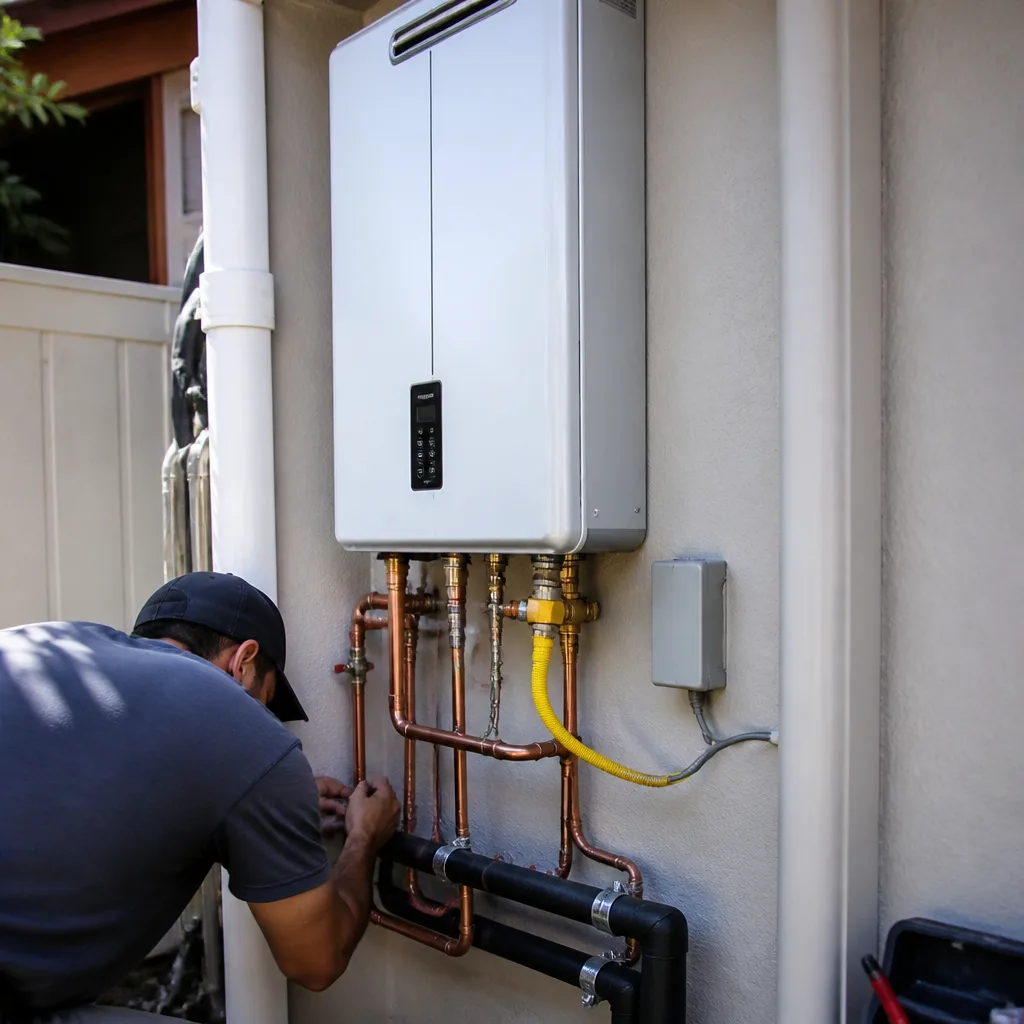
- Water heater replacement: yes, even a like-for-like swap requires a permit in both city and county jurisdictions.
- Roof replacement: full tear-offs require a permit; simple overlay repairs generally do not.
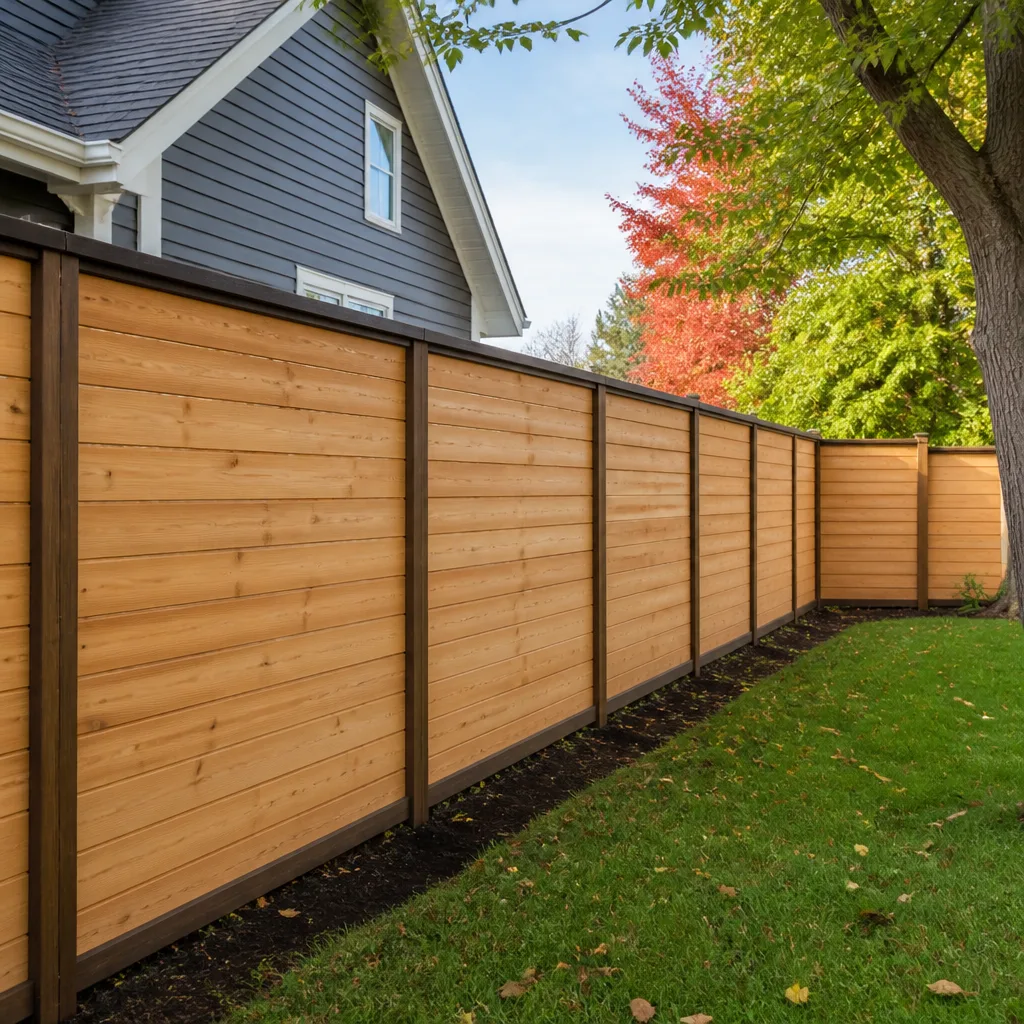
- Exterior work: new stucco, siding, decks over 30 inches above grade, and any retaining wall over 4 feet tall.
Cosmetic work, like painting, flooring, countertop replacement, cabinet refacing, and trim work, does not require a permit in West Covina. But be careful: the moment you touch electrical, plumbing, or structure behind those finishes, the inspector expects to see a permit. If you’re unsure, call the Building and Safety counter at West Covina City Hall and ask. They’ll answer a straightforward question over the phone. For deeper background, read our guide to Construction Permits, Codes & Inspections in CA: What You Need to Know.
General Contractor, Subcontractor, or Handyman: The Legal Difference
California law draws a hard line between a licensed general contractor, a licensed specialty subcontractor, and an unlicensed handyman. The difference matters for your liability, your insurance coverage, and your ability to collect if something goes wrong.
- General contractor (Class B license): Licensed by the Contractors State License Board to oversee projects that involve two or more unrelated trades. A home renovation in West Covina that touches framing, electrical, plumbing, and tile falls squarely under a general contractor’s scope. They carry worker’s comp, liability insurance, and a $25,000 license bond. If the contractor walks off the job, you can claim against that bond.
- Specialty subcontractor (Class C license): Licensed for a single trade, like C-10 electrical, C-36 plumbing, or C-54 tile. They can pull permits for their own trade only. If you hire a specialty contractor to manage a full remodel, they are working outside their license scope, and their bond won’t protect you.
- Handyman: Under California law, an unlicensed individual can perform work under $500 per project, including materials and labor. That’s it. Anyone doing a $2,000 bathroom “repair” without a contractor’s license is operating illegally. If an unlicensed worker is injured on your property, your homeowner’s insurance may deny the claim, and you could be personally liable for medical costs.
At Sawyer Remodel West Covina, we carry a Class B general contractor license and pull all permits for our projects under our own name. That means the inspection history is ours, the warranty is ours, and the accountability is ours. You never have to track down a subcontractor who disappeared after their portion of the job.
San Gabriel Valley Soil and Why It Affects Foundation Work
West Covina sits on the southern edge of the San Gabriel Valley, where the soil is a mix of alluvial deposits from the San Gabriel River and the rainfall-runoff patterns from the Puente Hills. In large stretches of the city, especially the flatlands south of the 10 Freeway and the areas around Cameron Avenue, the soil has a high percentage of expansive clay. Expansive clay swells when it gets wet and shrinks when it dries out. Over decades, that cycle pushes on foundation footings unevenly, which is why you see so many hairline cracks in West Covina slab foundations that are otherwise structurally sound.
For most remodels, this is not a problem. But it becomes one in three situations:
- Room additions: New footings must be engineered for the soil’s expansion potential. The city will require a soils report if the addition exceeds certain square footage thresholds.
- Retaining walls and hardscape: Expansive clay pushes laterally. Walls under 4 feet might survive it; anything taller needs a drainage system and proper reinforcement or it will crack within a few years.
- Plumbing trenches near the foundation: When we cut a trench for new drain lines close to the footing, we have to backfill with the right material and compact it properly. Loose backfill in expansive soil settles unevenly and can cause slab cracks later.
The practical takeaway: if your project involves digging near the foundation or adding a room, ask your contractor specifically about soil conditions. It’s not a West Covina-wide problem, but it’s common enough in this ZIP cluster that any experienced local remodeler should have a plan for it.
What a Written Price Before Work Starts Actually Protects You From
Most contractor horror stories share the same plot: a low verbal estimate, a request for a deposit, and then a steady stream of “unforeseen conditions” change orders that push the final invoice 30 – 50% over the original number. Learn the warning signs in our guide, Construction Warning Signs: A West Covina Homeowner’s Reference Guide. The homeowner has already paid real money and feels locked in. That’s the trap.
A written price before any tools are picked up protects you in specific, concrete ways:
- It locks the scope: If the written price says “rough-in plumbing for new shower valve,” that’s what the contractor is obligated to do for that number. Any additional work needs a separate written change order that you sign before it happens. You are never surprised by a bill you didn’t approve.
- It proves the contractor estimated properly: A contractor who has done this work knows what it costs. A contractor who hasn’t will guess low and make up the difference later. The written price separates them before you commit.
- It gives you evidence: In a dispute, a written price with a clear scope of work is the document that wins in small claims court or CSLB arbitration. Verbal estimates are worth exactly nothing.
- It forces line-item honesty: The number on the invoice should be the number you approved. Not close. Not “adjusted for market conditions.” The same number.
Every project at Sawyer Remodel West Covina gets a written, line-item price before work begins. This is part of what we call The Relay Visibility Guarantee: a written price, a live arrival time, and before-and-after photo updates, all confirmed before the first tool comes off the truck. If we find something behind drywall that we couldn’t have known about, we document it, show you photos, and you approve the change order before we proceed. That’s how a remodel should work.
Real Project Costs in West Covina
Here are realistic price ranges for common construction projects in West Covina, based on local labor rates, material costs, and the code-correction work that tract homes typically require. These are not bids, but they put you in the right ballpark before you talk to anyone.
| Project Type | Typical Range | What’s Usually Included |
|---|---|---|
| Bathroom remodel (full) | $28,000 – $55,000 | Demo, waterproofing, tile, vanity, fixtures, lighting, exhaust fan, permit |
| Bathroom remodel (cosmetic) | $12,000 – $22,000 | Paint, countertop, mirror, hardware, new toilet and faucet |
| Kitchen remodel (full) | $55,000 – $110,000 | Cabinet replacement, countertops, backsplash, lighting, plumbing rough-in, permit |
| Whole-home renovation (1,400 – 1,800 sq ft) | $120,000 – $250,000 | Full rewire, repipe, drywall repair, flooring, two bathrooms, kitchen, permit |
| Room addition (400 sq ft) | $180,000 – $260,000 | Foundation, framing, electrical, HVAC tie-in, roofing, drywall, permit |
| Window replacement (whole house, 12 – 16 windows) | $18,000 – $38,000 | Dual-pane vinyl or fiberglass, stucco return repair, permit |
| Roof replacement (1,600 sq ft) | $16,000 – $28,000 | Tear-off, underlayment, shingles, flashings, permit |
These ranges assume a licensed bathroom remodeling or renovation contractor pulling permits and carrying insurance. Unlicensed work is cheaper on paper and far more expensive in practice. Materials also swing the number: a Kohler or Toto fixture package adds a few thousand over off-brand, and Cambria or Caesarstone countertops run higher than laminate. We’ll show you options at different price points and help you decide where to spend and where to save.
The Construction Process: What Happens in What Order
Every construction project in West Covina follows roughly the same sequence. Knowing the order helps you understand where delays happen, what to expect, and when you can actually use the new space.
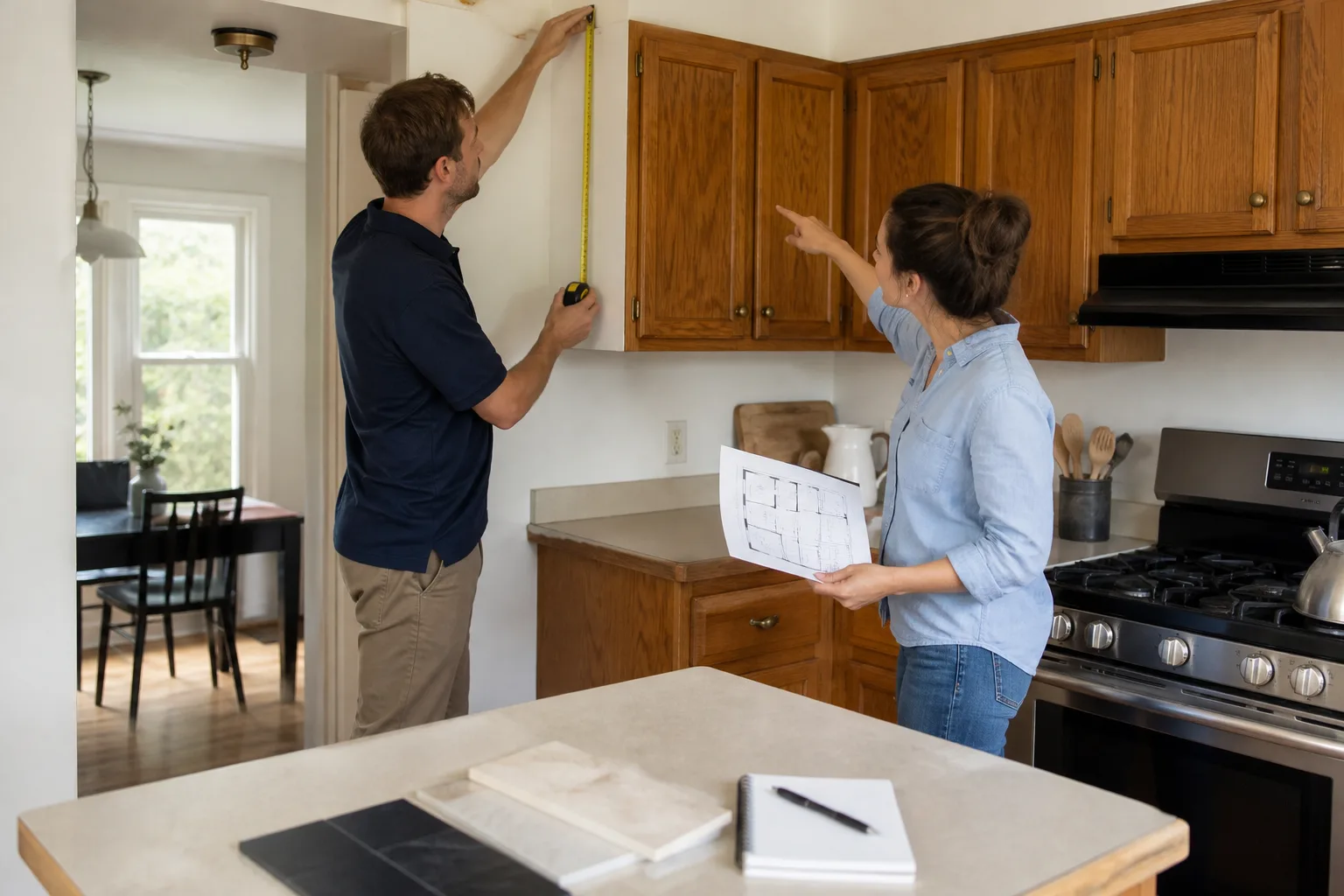
- Scope and pricing: You meet the contractor, walk the project, and receive a written line-item price. This should take days, not months. At Sawyer Remodel West Covina, this is the phase where we ask about your timeline, your budget ceiling, and what you’re willing to compromise on.
- Permit application: The contractor submits plans to the City of West Covina or LA County Building and Safety. Plan review typically takes 2 – 6 weeks depending on complexity. If structural changes are involved, you may need an engineer’s stamp.
- Demolition and discovery: Walls come open. This is where tract-home surprises surface: corroded drain lines, active knob-and-tube, unpermitted work from a previous owner. In our experience, roughly 7 in 10 West Covina remodels uncover at least one code correction that wasn’t visible during bidding.
- Rough-in: Framing, plumbing, electrical, and HVAC are installed and inspected. This is the structural heart of the project and the phase where inspectors are most involved. In West Covina, the city inspector visits are typically scheduled within a few days of request, but plan for buffer time.
- Finish work: Drywall, paint, tile, flooring, cabinets, countertops, fixtures. This is the phase most people picture when they think “remodel.” It moves fast once rough-in is approved.
- Final inspection and punch list: The inspector signs off, you walk the project with the contractor, and any remaining touch-ups get resolved. At Sawyer, this is also where the 365-Day Done Right Promise kicks in: a full year after closeout, if something we did isn’t right, we come back and make it right. In writing, on every job.
Common Mistakes to Avoid
- Skipping the permit to save money. Unpermitted work in West Covina shows up on inspection reports when you sell, and the city can require you to open walls to prove the work was done right. The permit costs far less than the fix.
- Hiring a contractor based on the lowest bid. A low bid on a 1950s tract home is usually a contractor who hasn’t budgeted for what’s behind the walls. You’ll pay for it in change orders.
- Assuming the project won’t disturb asbestos or lead paint. Homes built before 1978 in West Covina often have lead paint, and pre-1980s ceiling texture may contain asbestos. Testing costs a few hundred dollars. Remediation for an unplanned discovery costs thousands.
- Not checking the license and insurance yourself. Ask for the CSLB license number, verify it on the CSLB website, and ask for a certificate of insurance with your name on it. A legitimate contractor does this without hesitation.
- Paying too much upfront. California law caps the down payment for home improvement contracts at 10% of the total project price or $1,000, whichever is less. Anyone asking for 30 – 50% down is outside the law.
- Confusing “free estimate” with “free design.” An estimate tells you what it costs. Design, engineering, and permit drawings are work products and may carry their own fees. Clarify what’s included before you sign.
- Choosing materials without seeing them in person. Tile color on a screen is not tile color under West Covina’s afternoon sun. Look at full-size samples in your actual room before committing.
When to Call a Professional
Call a licensed general contractor when the project touches plumbing, electrical, structure, or anything that requires a permit. If you’re moving a wall, adding a bathroom, rewiring a panel, or cutting into a slab foundation, this is not a handyman job. It’s also worth calling early, even if you’re still deciding: a good contractor will tell you what’s feasible, what it roughly costs, and what permits the city will require before you’ve spent a dollar on design. Sawyer Remodel West Covina offers free estimates in West Covina, call (341) 217-4204 to schedule yours. Luca Romano, our owner, walks most first-site visits personally.
Frequently Asked Questions
A full bathroom remodel in West Covina typically runs $28,000 – $55,000, a kitchen remodel $55,000 – $110,000, and a whole-home renovation $120,000 – $250,000. The wide range reflects the age of your home: pre-1971 tract houses almost always require electrical, plumbing, and seismic code corrections that add 20 – 40% to the cosmetic budget. Call (341) 217-4204 for an exact quote on your specific project, estimates are free.
Yes, if the project involves structural changes, electrical panel work, plumbing relocations, water heater replacement, roof replacement, or exterior work like stucco and siding. Cosmetic work like paint, flooring, and countertop replacement does not require a permit. Your address determines whether you file with the City of West Covina or LA County Building and Safety. Call the city counter or ask your contractor to confirm before you start.
A general contractor holds a Class B license from the CSLB and is legally authorized to manage projects involving multiple trades, carry insurance, and pull permits. A handyman can legally perform only projects under $500 including materials. Hiring an unlicensed worker for larger jobs puts your liability, your insurance coverage, and your home’s safety at risk.
A full bathroom remodel takes 4 – 8 weeks from permit to finish. A kitchen runs 6 – 12 weeks. A whole-home renovation of a 1,400 – 1,800-square-foot tract home usually takes 4 – 7 months. Permit review at the City of West Covina typically adds 2 – 6 weeks before construction starts, so factor that into your timeline.
Not if you have a written price and a clear scope of work. Unforeseen conditions, like corroded drain lines behind a shower wall, may require a change order, but that change order must be documented and signed by you before the work proceeds. At Sawyer Remodel West Covina, the number on the invoice is the number you approved, in writing, before any tools were picked up. Call (341) 217-4204 to get your written estimate.
Most West Covina housing stock was built between 1950 and 1975, under codes that predate modern seismic, electrical, and plumbing standards. Slab-foundation drain lines have corroded, knob-and-tube wiring is still active in many homes, and original framing lacks the shear walls the 1971 Sylmar earthquake regulations later required. Any competent contractor budgets for these discoveries and communicates them in writing, not as surprise change orders.
The Bottom Line
Construction in West Covina is a different animal from new-build work or remodels in newer Southern California cities. For more guides & resources on remodeling in this market, explore our blog. The tract home stock means code corrections, the permit map means jurisdictional homework, and the soil conditions mean foundation-adjacent work needs a local’s experience. None of this is a reason to avoid remodeling. It’s a reason to hire a contractor who knows the city, prices work in writing, and stands behind it for a full year. That’s the standard every homeowner should expect, and it’s the one Sawyer Remodel West Covina has been operating under since 2005. Call (341) 217-4204 and we’ll give you a written price before anything else happens.
Written by Luca Romano, Owner at Sawyer Remodel West Covina, serving West Covina since 2005.
See the difference
 Before
 After
After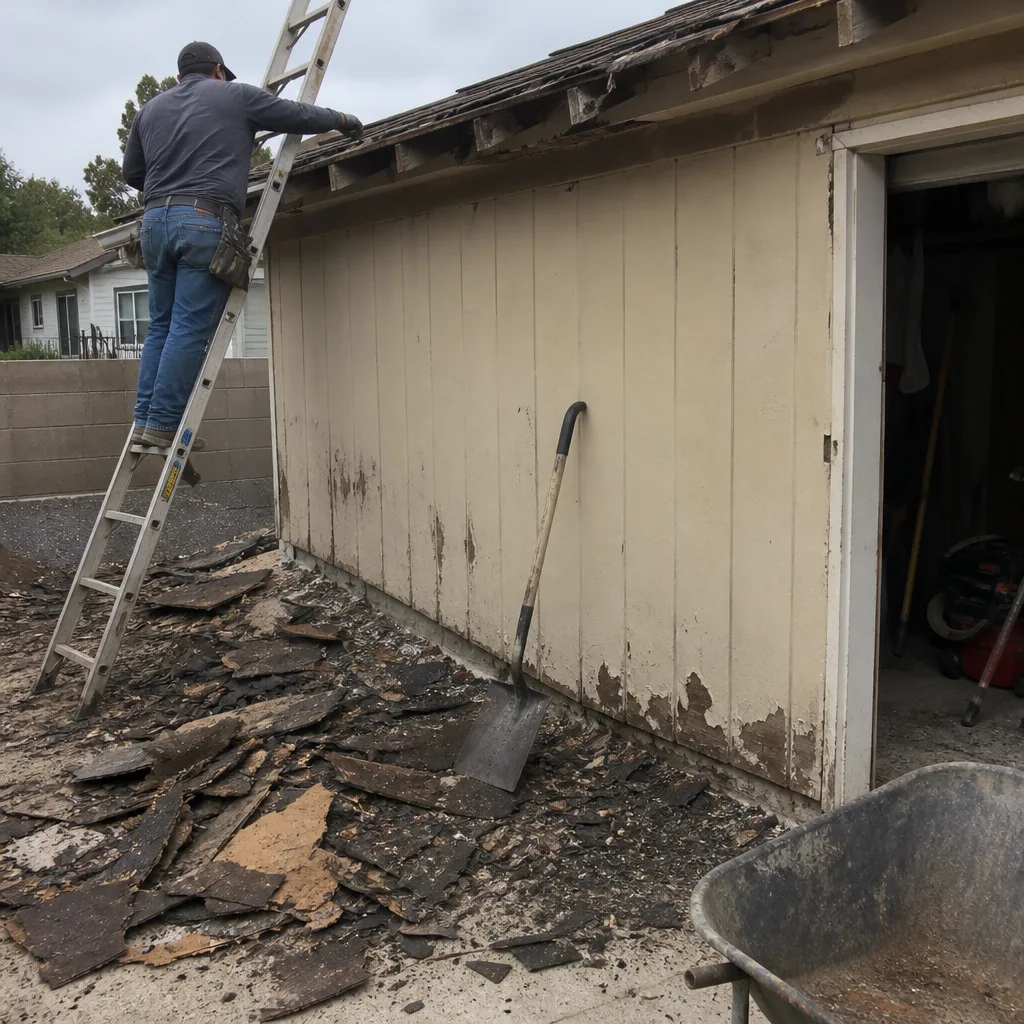 Before
 After
After Before
 After
After