Last updated October 16, 2026

Free written scope consultation - allowances, timeline, and change-order rules on paper before a single trade is scheduled
DIY vs Professional Construction: The West Covina Homeowner’s Decision Guide
Here’s a number that should stop you cold: California homeowners file roughly 8,000 complaints a year against unlicensed contractors, and a meaningful share of those started as “I’ll just do it myself and hire a guy from Craigslist for the parts I can’t.” The DIY decision in West Covina isn’t a personality test. It’s a legal and financial calculus, and most homeowners don’t learn the rules until a home inspector flags their handiwork during a sale. This guide walks through what California law actually says you can do yourself, what it flat-out prohibits, what insurance companies do when they find unpermitted work, and how to spot the projects where DIY savings are real versus the ones where they’re a slow-motion liability. For How to Hire a Construction Contractor in West Covina: A Step-by-Step Guide, see our companion resource.
Quick Answer
In West Covina, you can legally paint, tile, patch drywall, replace fixtures, and do cosmetic work on your own home without a contractor’s license, as long as the work doesn’t require a building permit. Structural changes, electrical panel work, gas line modifications, and most plumbing beyond fixture swaps require either a licensed contractor or a California owner-builder permit (if the work doesn’t touch load-bearing elements or branch circuits). The honest answer for most West Covina homeowners: DIY the finish work, hire a licensed contractor for the envelope and the systems.
Styles & brands we work with
Table of Contents
- What California Law Actually Allows Homeowners to Do
- The Risk Ceiling: Why Some Projects Have No DIY Upside
- What West Covina’s Housing Stock Means for Your DIY Plans
- Insurance and Resale: The True Cost of Unpermitted DIY
- The Honest Skill Assessment: Beyond YouTube Confidence
- What DIY Mistakes Actually Cost: A Project-by-Project Breakdown
- The Hybrid Approach: Licensed Scope, DIY Finishes
- Common Mistakes to Avoid
- When to Call a Professional
- Frequently Asked Questions
What California Law Actually Allows Homeowners to Do
The legal line in California is sharper than most homeowners realize. Under Business and Professions Code Section 7044, you can work on your own primary residence without a contractor’s license. That’s the owner-builder exemption, and it covers an enormous amount of territory. But it does not cover everything, and the exceptions are where people get hurt.
Here’s the breakdown as it applies to a single-family home in West Covina:
- Allowed without any permit or license: painting, flooring, trim work, cabinet replacement (not structural), fixture swaps, backsplash tile, landscaping, fence repair under 6 feet, door replacement in existing openings.
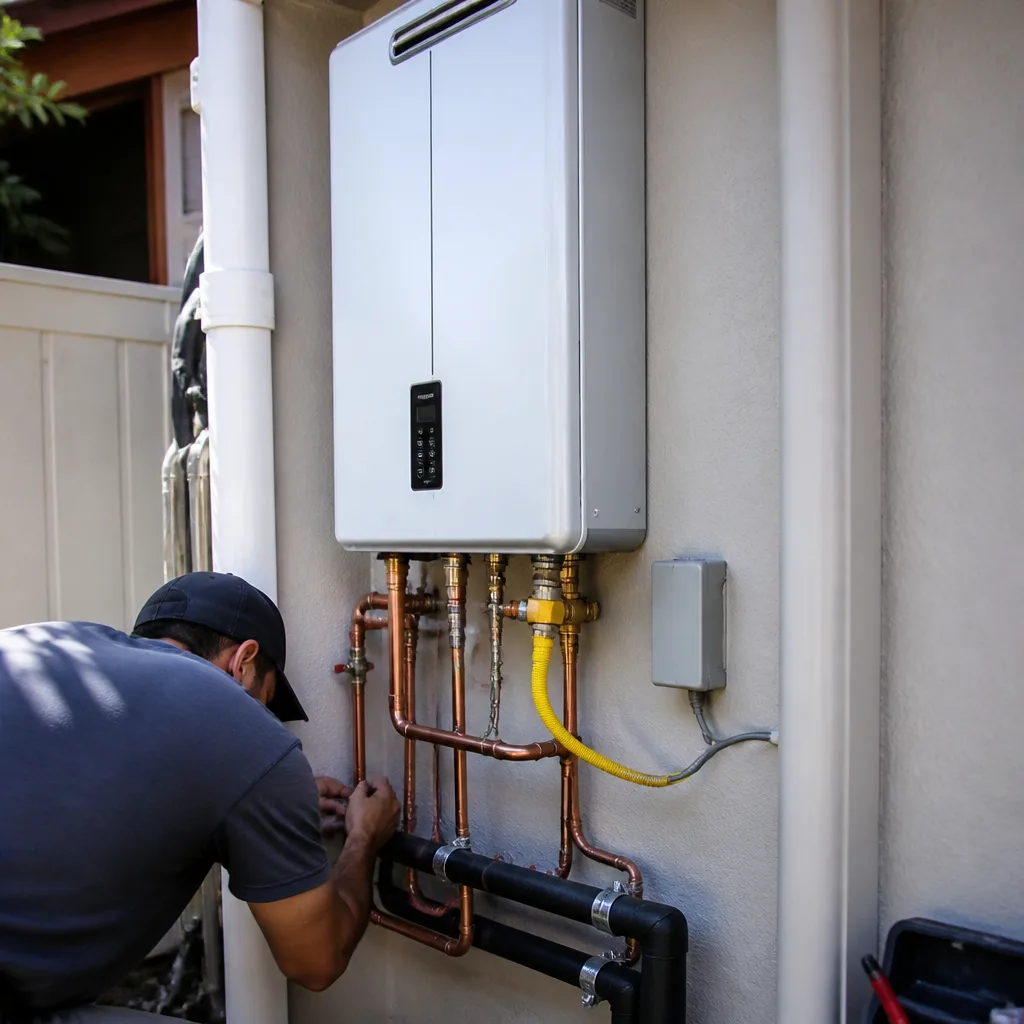
- Allowed with an owner-builder permit: non-structural remodels, full bathroom reconfiguration that doesn’t move a bearing wall, kitchen cabinet and counter replacement, window replacement in same-sized openings (West Covina requires a permit for window swaps), water heater replacement done to code.
- Never allowed as an owner-builder: moving or removing a load-bearing wall, any electrical work on your main service panel or adding new circuits (California allows owners to replace devices like switches and outlets, but not to add branch circuits), gas line modifications, any work on the sewer lateral, structural foundation work, whole-house rewiring, reroofing a home over 750 square feet in some West Covina jurisdictions.
The nuance matters. You can legally pull a permit as an owner-builder in West Covina for a bathroom remodel that keeps the walls where they are. You cannot legally do the same for a kitchen remodel that opens a load-bearing wall between the kitchen and living room, even with an engineer’s stamp on the plans. That wall movement requires a licensed general contractor with worker’s comp insurance and a Class B license, or a licensed specialty contractor for the relevant trade. As Luca Romano, who’s run Sawyer Remodel West Covina since 2005, puts it: “The owner-builder law wasn’t written to encourage weekend structural work. It was written so a competent homeowner could change their own sink. People confuse those two things constantly.”
West Covina sits in Los Angeles County, which means the county’s electrical and plumbing inspectors enforce the California Electrical Code and California Plumbing Code alongside the city’s building department. What that means in practice: a DIYer who runs new Romex for a home office without a permit isn’t just risking a fine. They’re creating a condition that the county will flag during any future permitted inspection, and the insurance carrier will flag during any future claim.
The Risk Ceiling: Why Some Projects Have No DIY Upside
Every home project has a risk ceiling. For some projects, the worst-case downside is a bad-looking result: you tile a shower niche crooked, you live with it or redo it, the total cost is materials and a weekend. For other projects, the ceiling extends far beyond anything a weekend can absorb.
Here’s the matrix we’ve seen play out across hundreds of West Covina remodel evaluations:
| Project | DIY Risk Ceiling | What Failure Actually Costs |
|---|---|---|
| Interior painting | Cosmetic only | Repaint cost, maybe $500 – $1,500 |
| Flooring install | Cosmetic plus competency | $2 – $8 per square foot to replace |
| Tile work, non-wet areas | Cosmetic | Weekend redo, a few hundred in material |
| Tile work, shower or tub surround | Water damage behind walls | $8,000 – $25,000 in mold remediation and rebuild |
| Fixture swaps (faucets, lights) | Minor water or electrical | Typically $200 – $1,500 if caught early |
| Window replacement, existing openings | Water intrusion, energy loss | $1,500 – $6,000 per window failure event |
| Electrical circuit additions | Fire, shock, code violation | $10,000 – $40,000 in rework plus potential insurance denial |
| Load-bearing wall removal | Catastrophic structural failure | No ceiling. This can cause a collapse. |
| Gas line work | Explosion, carbon monoxide, death | No ceiling. This is why permits exist. |
The rule of thumb: if the failure mode is “looks bad,” DIY has honest upside. If the failure mode is “water, fire, gas, or gravity,” the ceiling effectively disappears, and savings go from a few hundred dollars to five or six figures in worst-case scenarios. West Covina homes built in the 1950s and 1960s often have original galvanized and cast-iron plumbing, ungrounded knob-and-tube remnants, and roof framing that predates current seismic code. Those conditions make the no-ceiling projects even riskier here than they’d be in a 2010s tract home. Our Seasonal Construction Care for West Covina: Year-Round Homeowner’s Guide covers how to spot these aging-system warning signs before they become emergencies.
What West Covina’s Housing Stock Means for Your DIY Plans
West Covina is not a new-construction market. The bulk of the housing stock went up between 1948 and 1975, during a building boom that predated the current California Building Code, Title 24 energy standards, and modern seismic retrofit requirements. Drive through neighborhoods like South Hills, Woodside, and the unincorporated pockets near Valinda, and you’re looking at homes with plaster-and-lath walls, 2×4 framing where 2×6 is now code, and slab foundations poured without post-tension cable.
Here’s what that means for your DIY plan:
- Plaster walls change everything. These walls don’t use standard drywall anchors. Hanging a heavy mirror or cabinet requires toggle bolts, molly bolts, or direct stud attachment, and if you drill into a stud that’s been notched over 60 years of remodels, you can hit a pipe or wire that’s not where a stud finder expects it.
- Old plumbing is unforgiving. Cast-iron drain lines and galvanized supply lines from the 1950s are at the end of their service life. A homeowner who over-torques a fitting during a simple faucet swap can crack a galvanized nipple inside the wall, creating a slow leak that won’t show itself until the drywall bubbles. That’s a $1,200 repair born from a $12 DIY savings.
- Electrical panels are often at capacity. Many West Covina homes still run 60-amp or 100-amp panels. A homeowner who adds a second bathroom circuit for a heated floor or an EV charger may overload the panel. That’s not just a code violation; it’s a heat event waiting for a year of use.
- Seismic and soil conditions. West Covina sits east of the Whittier fault and is classified in a seismic hazard zone. Excavating more than 12 inches anywhere in the footprint of an addition triggers geotechnical review. Most owner-builders don’t know this until the permit counter informs them their foundation plan needs a soils engineer’s stamp.
The takeaway: West Covina’s housing stock doesn’t raise the skill ceiling as much as it changes the substrate of every project. A bathroom remodel in a 1963 home means working on walls that aren’t square, floors that have settled 3/4 inch, and plumbing that’s been patched by three previous owners. In our experience across the West Covina market, that’s where hiring a General Contractor in West Covina pays for itself. The professional isn’t there for the easy 80% of the project. They’re there for the 20% that the house hides until you open the wall.
Insurance and Resale: The True Cost of Unpermitted DIY
The most expensive DIY project in California is often the one that goes perfectly. Because when it goes perfectly, the homeowner never thinks about it again until one of two moments: the house goes up for sale, or the house catches fire for an unrelated reason and the insurer starts asking questions.
What an insurer sees
Homeowners insurance policies in California contain a standard clause: the policyholder must obtain all required permits for any work that requires them. That clause sits quietly in the fine print until a claim happens. Then the claim adjuster pulls the permit history. If unpermitted electrical work exists, and a fire loss happens, the carrier can deny the claim even if the unpermitted work wasn’t the ignition point. The burden shifts to the homeowner to prove otherwise. That’s not a hypothetical scenario. It’s a documented, recurring outcome in Los Angeles County claims.
What a title report shows
Unpermitted DIY work becomes a disclosure item. When you sell a home in California, the Transfer Disclosure Statement asks specifically whether any work was done without permits. If you say no and the buyer’s inspector finds evidence later, you’ve committed fraud in a real estate transaction. If you say yes, the buyer can demand a retrofit permit, a price reduction, or walk. In practice, a West Covina home with unpermitted bathroom or kitchen work sells for 3% to 8% less than a comparable permitted home, based on the appraisal adjustments we’ve seen on West Covina remodels and sales. On an $800,000 home, that’s $24,000 to $64,000 of value surrendered.
What a home inspector flags
Inspectors in West Covina are trained to spot DIY work in three seconds. The markers: Romex stapled to the face of a stud instead of run through drilled holes, drywall seams in bathrooms without proper moisture board, missing GFCIs within 6 feet of a sink, unsupported spans on recently opened walls. Once flagged, the lender may require a licensed contractor’s sign-off before funding the buyer’s loan. That means you’re paying a contractor post-hoc to certify work they didn’t do, which most won’t do. The alternative is an invasive and destructive inspection that costs more than just having done the work right.
The practical rule: if the work touches any system your insurance policy or future buyer’s lender will examine, permit it and hire licensed. The Home Renovation in West Covina path with proper permits costs more upfront, but it’s the only path that doesn’t create a contingent liability on your largest asset.
The Honest Skill Assessment: Beyond YouTube Confidence
YouTube has done two things to home improvement. It has genuinely democratized access to technique, and it has catastrophically flattened the perceived difficulty curve. A 17-minute video on “How to Install a Kohler Shower Valve” cannot convey what it’s like to discover that the 60-year-old copper stub behind your tile has a crack that now needs re-soldering at a depth of 14 inches through a hole the size of a playing card. The video knows the ideal case. Your house is rarely the ideal case.
Here’s a five-factor skill assessment we use with West Covina clients who are deciding whether to DIY or hire. Answer honestly:
- Substrate reality. Is the thing you’re attaching to flat, square, and standard? In a 1963 West Covina home, the answer is almost always no. Studs are 19.2 inches on center in some tracts, plaster thickness varies from 5/8 inch to 1 inch, and floors have settled. If the project assumes a perfect substrate, you need the skills to correct the substrate first. That is a separate trade.
- Consequence tolerance. If this fails, what’s the worst outcome? Looks bad, or floods the room below? Tile in a powder room floor and tile in a second-story shower are not the same project. Be honest with yourself.
- Time stamina. A pro bathroom remodel in West Covina takes 3 to 6 weeks depending on scope. The same remodel as a DIY and nights-and-weekends project takes 8 to 14 months. Do you have a second bathroom? Does your spouse have patience? Will a six-month construction zone in your own house affect your marriage more than a contractor invoice would? The answer matters.
- Tool reality. A wet saw for tile costs $400 to $800 to buy, $40 to $80 to rent per day. A diamond blade for cutting plaster is $30. A good level, a mixing drill, a self-leveling laser, notching trowels, masonry bits, and a dozen other items add up fast. The first-time DIYer in West Covina typically spends $800 to $1,500 on tools for a bathroom remodel. That’s 10% to 15% of the total project budget.
- Code knowledge. In West Covina, every permitted project requires an inspection. If you can’t articulate how the California Plumbing Code treats drainage slopes, venting, and P-traps, you’re not a plumber. If you can’t explain arc-fault circuit interrupter requirements under the 2023 National Electrical Code as adopted by Los Angeles County, you’re not an electrician. The code isn’t optional. It’s the contract between the work and the safety of the people living in the house.
If you score yourself lower than honest on items 1, 2, and 5, hire. It’s that simple. The savings you’re protecting have a name: they’re the equity in your house.
What DIY Mistakes Actually Cost: A Project-by-Project Breakdown
The phrase “a bad tile job costs you a weekend” is only true if the bad tile job is on a floor over a concrete slab in a single-story house. Every other location changes the calculus. Here’s what we’ve actually seen in West Covina homes, priced at current Los Angeles County rates:
Bad tile in a shower: $9,000 to $22,000
Water gets behind the tile through a pinhole in the grout, a gap in the Schluter edge trim (the metal strip that waterproofs where your tile meets the floor), or a failed seam at the pan. By the time you see the water stain on the ceiling below, the shower pan has been leaking for months. Remediation means full demo of the shower, mold treatment, subfloor replacement, and rebuild. The water damage portion alone routinely clears $5,000 before any finish materials go back in.
Bad electrical: $12,000 to $45,000, with no upper bound
An overheated junction box in an attic, a reversed neutral, an overloaded circuit with a 20-amp breaker on 14-gauge wire. These are not hypotheticals. They’re what inspectors find in West Covina homes where a previous owner “did the electrical myself.” When the county flags it during a future permitted inspection, the repair is the entire circuit, not the junction box. And if the insurance claim is what triggers the discovery, the policy may deny the loss entirely.
Bad structural work: no ceiling
An owner-builder removes a wall without identifying it as load-bearing, or notches a floor joist to run a plumbing drain. The house doesn’t fall down immediately. It sags over a period of months to years. By the time cracks appear in the ceiling and the doors stop closing, the repair is engineering assessment, shoring, beam installation, and finish repair. Six figures is not uncommon. Insurance rarely covers it because the damage was gradual and caused by workmanship, not a covered peril.
Bad tile on a floor over a slab: $600 to $1,200 in materials and a weekend
This is the actual good DIY project. The worst case is cosmetic, the fix is straightforward, and nobody’s insurance gets involved. Same for interior paint, cabinet hardware, baseboard, and door replacements within existing openings. These are the projects where DIY savings are real and the risk ceiling stays in the basement.
The distinction isn’t subtle. It’s the difference between “the finish looks off” and “the system fails silently.” One you can fix. The other owns you.
The Hybrid Approach: Licensed Scope, DIY Finishes
The most underused strategy in West Covina remodeling is the hybrid: hire a licensed contractor for the scope, permits, trades, and rough-in, then do the finish work yourself. This isn’t a compromise. It’s the rational way to handle a project where the liability lives in the first 50% and the savings live in the last 50%.
Here’s how it works on a typical West Covina bathroom remodel:
- Contractor scope: demo, structural assessment, permit pull, plumbing rough-in (moving the drain or supply lines), electrical rough-in (adding a circuit, moving an outlet, installing a vent fan to code), waterproofing the shower or tub surround, and all inspections at rough-in and final.
- Homeowner scope: painting, vanity install (pre-assembled), mirror and hardware, towel bars and accessories, caulking the baseboard, maybe even tile on non-wet areas like the floor if the substrate is slab and the homeowner has the patience.
- The split: on a bathroom remodel in West Covina that costs $18,000 to $30,000 all-in, the hybrid typically saves $3,000 to $7,000 in labor for the finish phase. That’s real money, and the homeowner keeps full control of the visible result.
The key is getting the line drawn before the project starts, in writing, as part of the contract. A good contractor will scope the hybrid cleanly: their trades handle everything behind the tile and inside the walls, the homeowner handles everything outside the tile and on the surface. The contractor’s permit covers the inspection, the homeowner’s finish work is inspected on the same final walk, and nobody has to wonder who owns the waterproofing.
At Sawyer Remodel West Covina, we’ve built hybrid scopes into our standard process. The written price covers the licensed scope. The finish work is itemized separately, so the homeowner sees exactly what they’re taking on and what it’s saving them. No surprises, no change orders lurking in the middle of the job.
One caution: don’t hybrid the waterproofing. If you’re going to DIY anything in a bathroom, make it the paint and the hardware. The waterproofing system beneath the tile, whether it’s a Schluter membrane or a traditional pan liner, is the single most consequential layer in the room. It fails silently, it costs five figures to fix, and no insurer will cover a DIY waterproofing failure. That’s a contractor scope. Always.
Common Mistakes to Avoid
- Treating a load-bearing wall like drywall. In West Covina’s 1950s and 1960s homes, walls that run perpendicular to the roof ridge are load-bearing more often than not. Removing one without an engineer’s assessment and a proper header is the most common catastrophic DIY mistake in this market. It never goes well.
- Assuming the previous owner’s work was permitted. West Covina homes have passed through multiple ownership cycles. “It has a second bathroom that’s not on the tax record” is a red flag you inherit at purchase. Pull a permit history before doing anything that touches that room.
- Using the wrong drywall in wet areas. Standard drywall behind tile in a shower is a time bomb. The failure shows up years later and the repair is the full shower. Green board is not waterproof. Only cement board or foam board with a waterproofing membrane meets code.
- Adding circuits on a 60-amp panel. The panel doesn’t have the headroom. The inspector will fail it. The rewire is $8,000 to $18,000 depending on access. Know your existing service before planning any electrical scope.
- Assuming the permit office is optional. In West Covina, the building department cross-references with the county assessor. Unpermitted square footage gets flagged at sale, at refi, and at any insurance claim. There is no statute of limitations on the discovery.
- Buying materials before checking local availability. Some West Covina suppliers stock limited quantities of specialty trim and tile. Ordering the correct Schluter profile takes a week at the best of times. Factor order lead times into any DIY timeline.
When to Call a Professional
Call a licensed contractor when the project touches structural framing, the main electrical panel, any gas line, any plumbing beyond fixture replacement, any roof penetration, any foundation work, or any waterproofing system. Our General Contractor Maintenance Checklist for West Covina Homeowners can help you assess which category your project falls into. Call a contractor when the project requires a permit and you don’t have the bandwidth to manage inspections, plan reviews, and code compliance alongside your actual job. Call a contractor when the failure mode of the work carries a cost that exceeds your project budget. And call a contractor when you’ve started a DIY project, opened a wall, and found something that wasn’t in the YouTube video. The most expensive contractor in West Covina is the one you hire after the DIY goes sideways. Sawyer Remodel West Covina offers free estimates throughout West Covina, including South Hills, Woodside, and the Valinda area. Call (341) 217-4204 for a written price before any work starts.
Frequently Asked Questions
Yes, California’s owner-builder exemption allows you to remodel your own primary residence without a contractor’s license, including pulling your own permits, as long as the work doesn’t involve moving load-bearing walls, modifying the main electrical panel, touching gas lines, or excavating for foundation work. West Covina’s building department will issue owner-builder permits for non-structural bathroom remodels. The work still must meet code and pass inspection. Call (341) 217-4204 if you’d rather hand the permits and inspections to a licensed contractor.
Replacing a bathtub in the same location with a like-for-like unit typically doesn’t require a permit in West Covina, but moving the tub to a new location or changing the drain location does, because it alters the plumbing rough-in. If you’re replacing the tub and surrounding tile, the shower waterproofing must meet current code, which most older West Covina homes don’t. A contractor will typically include a permit on any tub replacement that involves opening walls.
Retroactive permits and corrections for unpermitted work in West Covina typically run $2,000 to $12,000 depending on scope, and that’s before any demolition needed to expose the work for inspection. If the work is structural or electrical, the inspector may require opening walls or ceilings to verify it, adding $1,000 to $5,000 in repair costs on top. The value hit at resale is separate and typically 3% to 8% of the home’s price if the work is disclosed. For an exact scope and price, call (341) 217-4204.
California law allows a homeowner to replace existing devices like outlets, switches, and light fixtures on their own home without a permit. It does not allow a homeowner to add new branch circuits, modify the main panel, run new wiring through walls, or install subpanels. Those require an electrical permit and, in practice, a licensed electrician. West Covina sits under Los Angeles County electrical code enforcement, and inspectors actively flag unpermitted work during any subsequent inspection.
For cosmetic projects like painting, flooring over slab, and hardware replacement, DIY saves 100% of labor costs and is generally worth it. For projects involving water, electrical, gas, or structure, the projected DIY savings average $2,000 to $8,000, while the average consequence of a failure averages $9,000 to $45,000. The asymmetry is the point. Hybrid scopes that split licensed rough-in from DIY finish work capture most of the savings without most of the risk. Estimates are free: call (341) 217-4204.
A licensed contractor typically completes a full West Covina bathroom remodel in 3 to 6 weeks including permits and inspections. The same project as a nights-and-weekends DIY typically runs 8 to 14 months, much of it spent waiting for inspections, tool rentals, and material deliveries. For kitchens, the professional window is 6 to 12 weeks; the DIY window is 10 to 18 months. The time cost is the most frequently underestimated line item in the DIY decision.
The Bottom Line
The DIY vs. professional decision in West Covina reduces to a simple test: what is the worst thing that happens if this goes wrong? If the worst thing is a crooked grout line, you’ve got a weekend project. If the worst thing is water, fire, gas, or a sagging roof, you’ve got a liability with a six-figure ceiling and an insurance company that’s going to ask questions. California draws the legal line at permits and owner-builder rules. Your equity draws the practical line at whatever you’d have to disclose when you sell. Paint your own walls. Tile your slab floor. Replace your own hardware. Leave the envelope, the systems, and the waterproofing to a licensed contractor, and put the price in writing before the work starts. Call (341) 217-4204 for a free estimate in West Covina.
Written by Luca Romano, Owner at Sawyer Remodel West Covina, serving West Covina since 2005.
See the difference
 Before
 After
After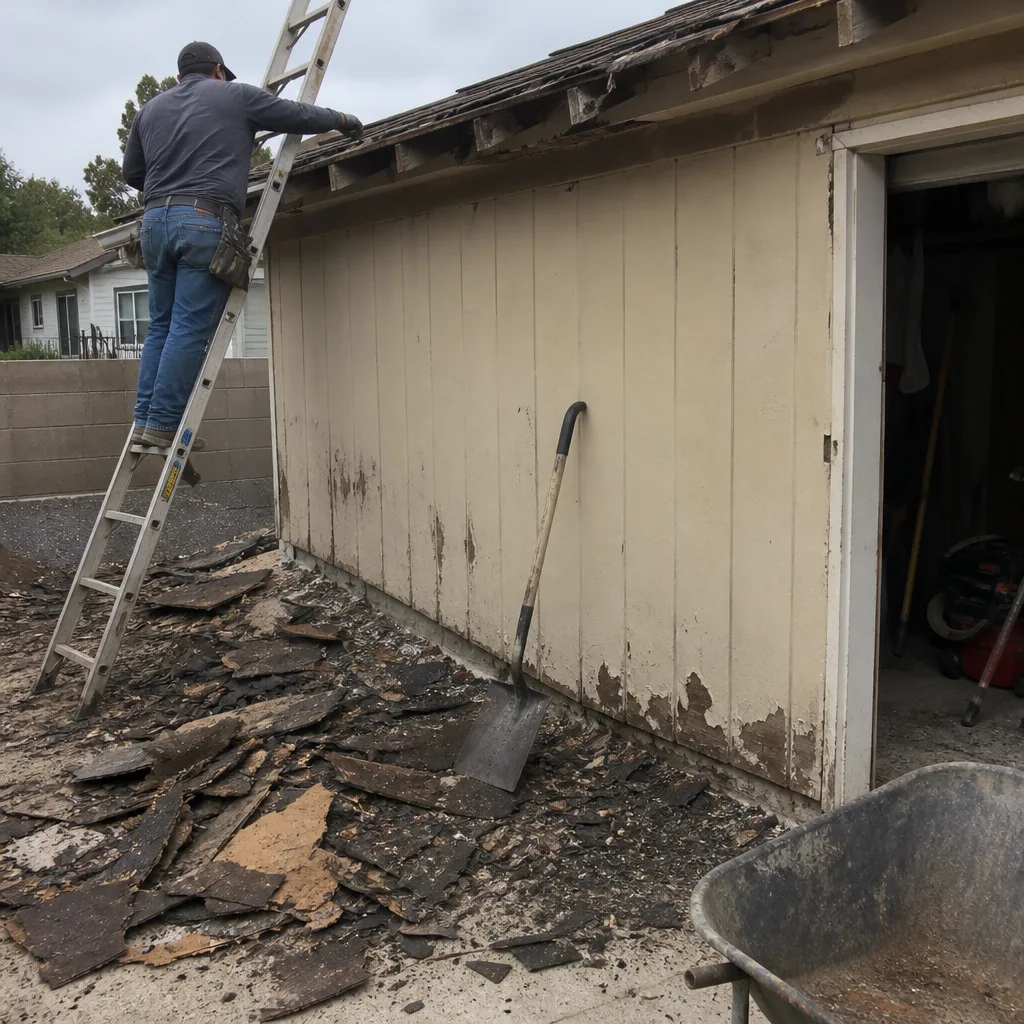 Before
 After
After Before
 After
After