Last updated October 16, 2026








Free written scope consultation - allowances, timeline, and change-order rules on paper before a single trade is scheduled
General Contractor Maintenance Checklist for West Covina Homeowners
Every year, West Covina homeowners spend thousands on repairs that started as a $15 fix. A hairline crack in stucco. A downspout dumping water against the foundation. A bathroom fan that stopped venting properly. None of these look urgent. All of them become urgent, usually around 2 a.m. or the first week of heavy rain. After running hundreds of walkthroughs across West Covina since 2005, we can tell you this: the house tells you what’s wrong. You just have to know where to look and when to look.
Quick Answer
A West Covina homeowner should walk their home twice a year with a specific checklist covering foundation, water management, stucco, HVAC, and the roof, and should have a contractor do a deeper inspection annually on 1950-1980 homes where galvanized pipes and single-pane windows hide problems a surface check misses. Start with water. Water is always the answer. If you control water, you control 80% of your maintenance costs.
Styles & brands we work with






Table of Contents
- Water, Drainage, and Foundation Movement
- Stucco, Drywall, and Reading Cracks Correctly
- The 1950-1980 West Covina Home: What Newer Guides Skip
- Roof, Gutters, and Rain Season Prep
- HVAC, Ventilation, and Attic Health
- Document Your Home’s Condition: The Baseline Photo System
- What to Check Monthly, Annually, and Once
Water, Drainage, and Foundation Movement
The most expensive call a West Covina homeowner makes is the emergency call, and 80% of the time, the problem started as something a contractor would have flagged on a routine walkthrough six months earlier. Water is the most common culprit, and West Covina’s clay-heavy soil makes it worse. Clay expands when wet and shrinks when dry. That cycle pushes against foundations, and over years, creates the settling and cracking patterns we see all over the city, from the older tracts near South Hills to the newer builds on the east side.
Walk These Items Every Spring and Fall
- Downspouts and splash blocks: Every downspout should move water at least 4 feet away from the foundation. A missing splash block is a $9 fix that prevents $9,000 in foundation work.
- Soil grading around the perimeter: You want soil sloping away from the house, not toward it. Walk the foundation line after a heavy rain and look for puddles that sit within 2 feet of the slab or stem wall.
- Irrigation overspray: Sprinklers that hit the exterior wall every morning are a slow drip of damage. Adjust heads so they spray plants, not stucco.
- Crawlspace moisture: If you have a raised foundation, check the crawlspace in spring. Look for standing water, damp insulation, or musty smell that says moisture isn’t leaving.
In our experience in West Covina, the homes with the fewest foundation issues are the ones where the owners treat rain gutters and downspouts as critical infrastructure, not decorative trim. It sounds boring. It saves real money.
Stucco, Drywall, and Reading Cracks Correctly
Not every crack means structural failure. Not every crack is cosmetic, either. The difference matters, and you can learn to read it in about ten minutes.
The Eye-Test for Cracks
- Width matters: A crack thinner than a credit card is almost always cosmetic shrinkage or thermal movement. A crack wider than 1/8 inch deserves a professional look.
- Direction tells the story: Hairline vertical or diagonal cracks in stucco near window corners are usually thermal movement. A crack that runs horizontally along a wall line, or stair-steps up through block, suggests movement or settlement.
- Watch over time: Mark the end of a crack with a pencil and the date. Check it in six months. If the pencil mark is still the end, it’s stable. If the crack grew past it, call a contractor before it gets worse.
- Interior vs. exterior: Drywall cracks at door corners on the interior are common and usually nothing. Exterior stucco cracks that let water in are something. Water gets behind stucco and the repair cost multiplies fast.
Here’s what we tell homeowners in West Covina: a crack you can fit a quarter into is a crack that needs professional assessment. A crack you can barely see needs a photo and a calendar reminder to recheck. This is the difference between maintenance and repair.
The 1950-1980 West Covina Home: What Newer Guides Skip
Most generic checklists are written for homes built in the last 20 years. A large portion of West Covina’s housing stock was built between 1950 and 1980, and those homes have their own anatomy. If your house dates from that window, these are the items that should live at the top of your maintenance list.
- Galvanized steel pipes: These corrode from the inside out. You won’t see damage until water pressure drops or a pinhole leak appears. If your home still has original galvanized supply lines, plan for replacement. It’s a matter of when, not if.
- Single-pane aluminum windows: They leak air, they sweat in winter, and in West Covina summer heat, they make your AC work harder than it should. Replacement is a bigger project, but maintaining the tracks and replacing worn weatherstripping buys you time.
- Asbestos-era popcorn ceilings: If your ceiling texture was applied before 1980, treat it as potentially containing asbestos. That doesn’t mean panic. It means don’t scrape it yourself, and don’t start a ceiling project without having it tested. This is one of the few areas where we tell homeowners in no uncertain terms to leave it to professionals.
- Original electrical panels: Some 1960s panels are known fire hazards. If your panel is original to the house and you’ve never had an electrician open it, have one look. This is a specific, nameable risk, and it’s worth the service call.
Newer home guides tell you to change your air filters. Good advice. But on a 1965 West Covina ranch, the urgent list starts with what’s inside the walls and ceiling. A home inspector will note these things in a report. A contractor doing a maintenance walkthrough is checking them against what they see every day in the field, which is a different lens entirely.
Roof, Gutters, and Rain Season Prep
West Covina gets most of its rain between November and March. That means September and October are the months to handle roof and gutter items, not November. By the time the first atmospheric river rolls in, the window for comfortable repairs has already started closing.
- Gutter cleaning: Leaves and debris from nearby trees can clog gutters faster than homeowners expect. Clean them twice a year, and after any major wind event. A clogged gutter sends water over the edge and straight down the wall, which leads to stucco damage and foundation issues.
- Downspout extensions: Already covered above, but worth repeating. Every extension should push water well away from the house.
- Flashing inspection: The metal strips where roof meets wall or chimney are common leak points. If you see lifted flashing or dried-out sealant, fix it before rain season.
- Shingle or tile check: Walk the property with binoculars. Look for cracked tiles, missing shingles, or spots where the roof line sags. Don’t climb up if you’re not comfortable with heights. A contractor can do a visual from the eaves and spot most issues.
Roofing brands like GAF and Tamko build products that handle West Covina’s heat and periodic heavy rain well, but no shingle is a substitute for clean gutters and intact flashing. The most common roof leak we see in West Covina isn’t from the shingle failing on its own. It’s from water backing up and finding a gap around a penetration or a wall intersection.
HVAC, Ventilation, and Attic Health
Your attic is the lungs of the house. When ventilation fails, heat builds up in summer, shingles age prematurely, and the AC has to fight harder just to hold temperature. When moisture builds in winter, you get mold and warped sheathing. Both are preventable with a walk up to the attic twice a year.
What to Check
- Bathroom fan exhaust: The fan should vent to the outside, not into the attic. Run the fan and verify air is actually moving through the vent. A fan that just rattles is moving nothing.
- Insulation condition: Look for spots where insulation is compressed, missing, or damp. Damp insulation means a roof or vent leak above it.
- Attic vent screens: Birds and rodents get into attics through damaged vent screens. Wire mesh should be intact on every vent.
- Ductwork condition: Flexible ducts can separate at joints over time. Disconnected ducts blow conditioned air into the attic instead of your rooms, and the AC runs longer to compensate.
In West Covina, summer temperatures regularly hit the 90s. A properly vented attic can cut your cooling load noticeably. This isn’t a comfort issue. It’s a mechanical wear issue, and it’s one of the areas where spending an hour twice a year pays back in equipment longevity and lower utility bills.
Document Your Home’s Condition: The Baseline Photo System
Insurance claims, contractor disputes, and even future home sales all hinge on one thing: what you can prove about the condition of your home. Most homeowners have hundreds of photos of their kids and about seven photos of their actual house. Here’s how to build a baseline.
- Pick a day twice a year: The first weekend of April and the first weekend of October work well for West Covina’s climate. One in the dry season, and one before rain season starts.
- Walk the perimeter first: Photograph every wall from a consistent distance. Include roof edges, window frames, and where the wall meets the ground. These exterior shots are the first thing looked at in any water intrusion claim.
- Then the interior: Photograph ceilings in every room, especially near windows and doors. Bathroom ceilings and walls around showers are the highest-value shots. Kitchen floor near the sink is second.
- Label the files: “Master-bath-ceiling-east-wall-April-2025” is a file name. “IMG_4821” is a mystery. The labeled version is the one that saves you.
- Store off-device: Use cloud storage. Phones break and get lost. A photo that exists only on a dead phone doesn’t help you in a claim.
This takes an hour twice a year. When a claim or dispute comes, and they do come, you’ll have an unassailable record of what the house looked like before the damage. That’s leverage, and it costs you almost nothing.
What to Check Monthly, Annually, and Once
Most checklists mush everything into one list and tell you to do it every weekend. That fails, because nobody does it. The better system is frequency tiers, and it’s the one we use with our own clients in West Covina.
Monthly (DIY, 10 Minutes)
- Check under sinks for moisture or small drips.
- Run bathroom fans for 5 minutes and verify air movement.
- Check the water heater area for rust, drips, or corrosion.
- Walk the exterior and visually scan the roof line from the ground.
Twice a Year (DIY, Half a Day)
- Clean gutters and check downspout extensions.
- Turn on every exterior hose bib and check for leaks.
- Test every GFCI outlet in the kitchen, baths, and garage.
- Document the home with the baseline photo system above.
- Check window and door weatherstripping for gaps.
Annually (Contractor Eyes)
- Full roof inspection including flashing and penetrations.
- Foundation perimeter check for new cracks or movement.
- Crawlspace inspection for moisture and pest activity.
- HVAC system check including ducts and attic venting.
- Exterior stucco and caulking assessment.
One-Time Professional Assessment
- Whole-home electrical panel inspection by a licensed electrician.
- Sewer line camera inspection, especially on 1950-1980 homes.
- Asbestos testing if your home has pre-1980 ceiling texture or flooring.
- Full general contractor walkthrough to establish your baseline condition report.
The point of a frequency system is that the house gets looked at with the right level of attention at the right interval, without requiring you to become a full-time inspector. Monthly items take ten minutes. The annual contractor walkthrough is the one that catches what the other eleven months miss. This is exactly the kind of assessment included when you bring in a general contractor in West Covina for a maintenance check.
What a Contractor Checks That a Home Inspector Doesn’t

Home inspectors and general contractors both walk houses, but they’re answering different questions. A home inspector is looking at a snapshot: what’s the condition on this date, for the purpose of a real estate transaction. A contractor is looking at a trajectory: what’s wearing, what’s failing, what’s the repair going to look like, and what caused this in the first place.
The Practical Differences
- Inspector: Notes that the bathroom fan vents into the attic and flags it as a concern. Contractor: Opens the attic access, traces the duct, and tells you exactly what re-routing it will involve.
- Inspector: Records a foundation crack as “monitor for further movement.” Contractor: Cuts away a section of drywall to see if the crack goes through the structure, and gives you a repair price on the spot.
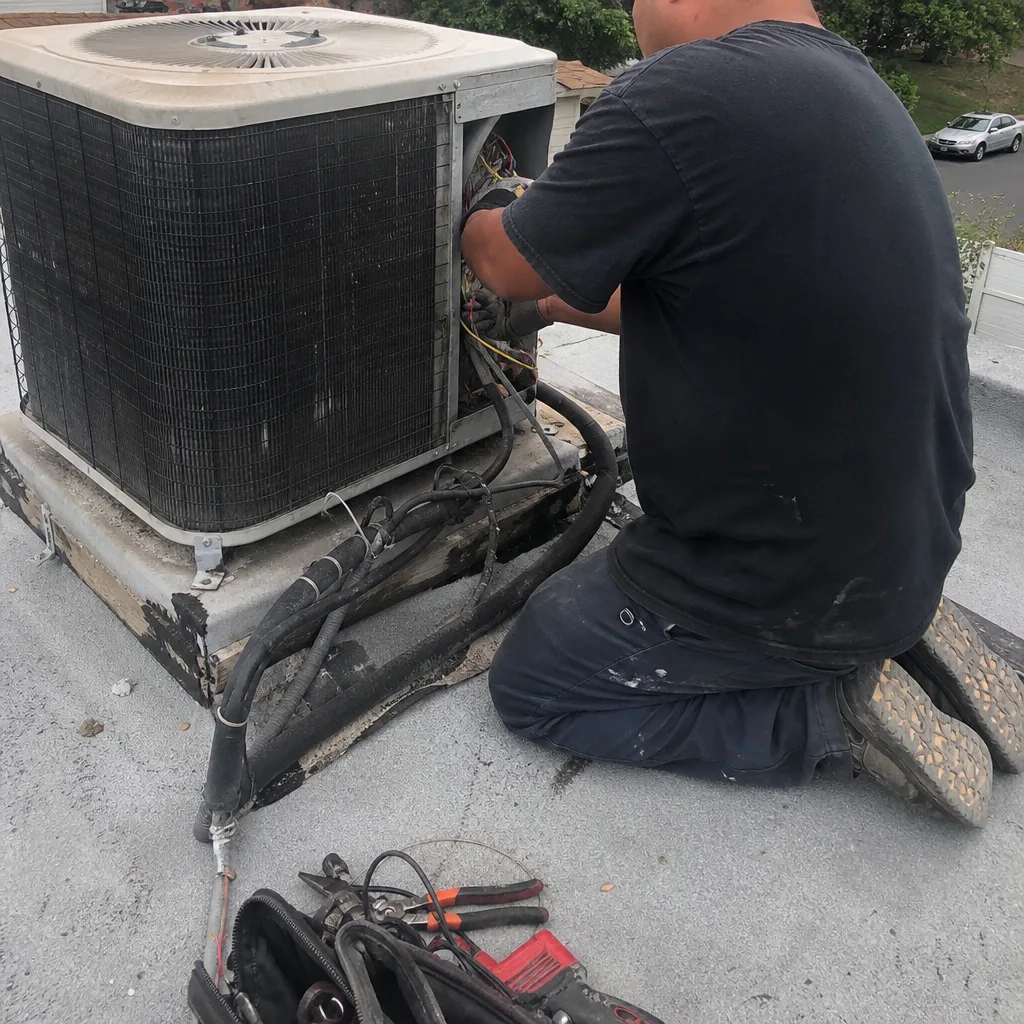
- Inspector: Points out that the A/C is older. Contractor: Checks the condenser fins, the duct joints, and the drain line, then tells you which of those three is actually costing you money.
An inspector gives you a report you use to negotiate a sale. A contractor gives you a prioritized list you use to protect the house. Both are valuable. They’re not interchangeable. For a home you already own and plan to keep, the contractor walkthrough is the one that saves you from the emergency call.
See the difference
 Before
 After
After Before
 After
After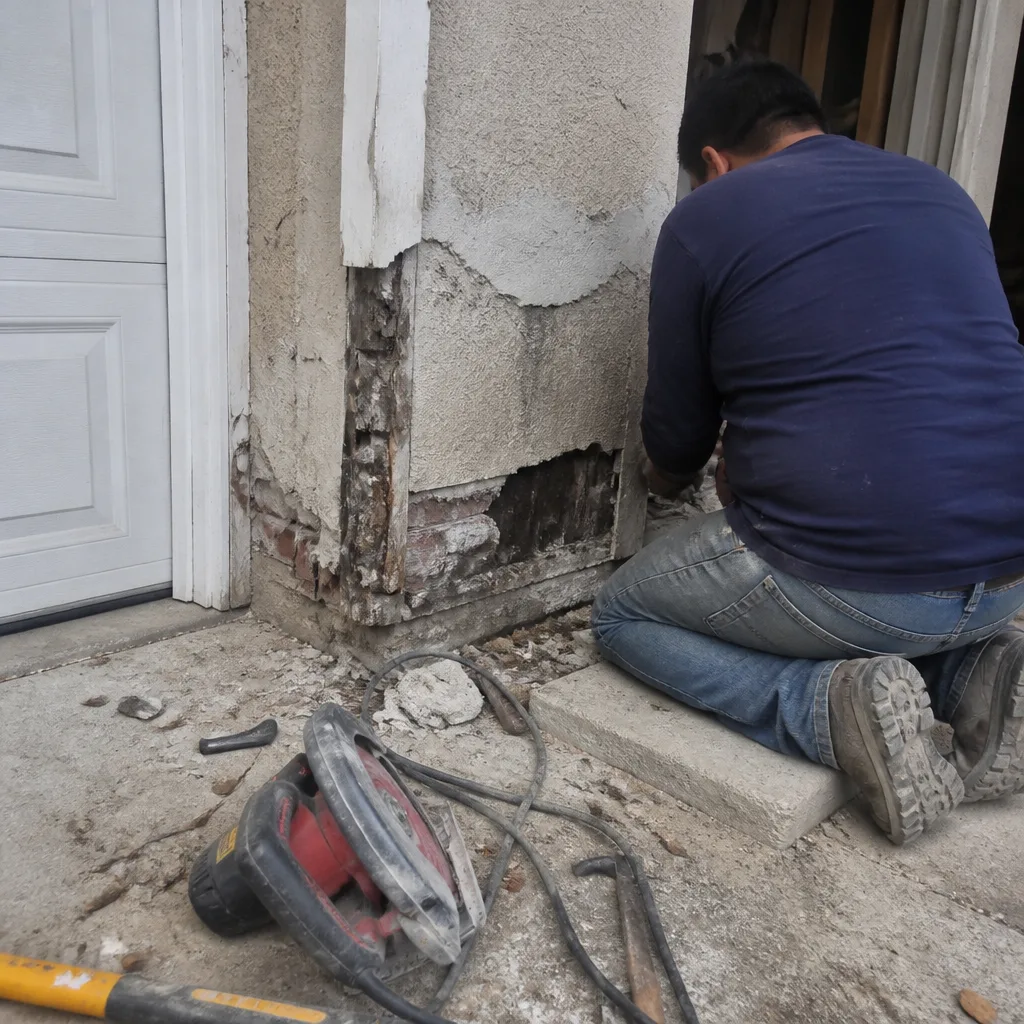 Before
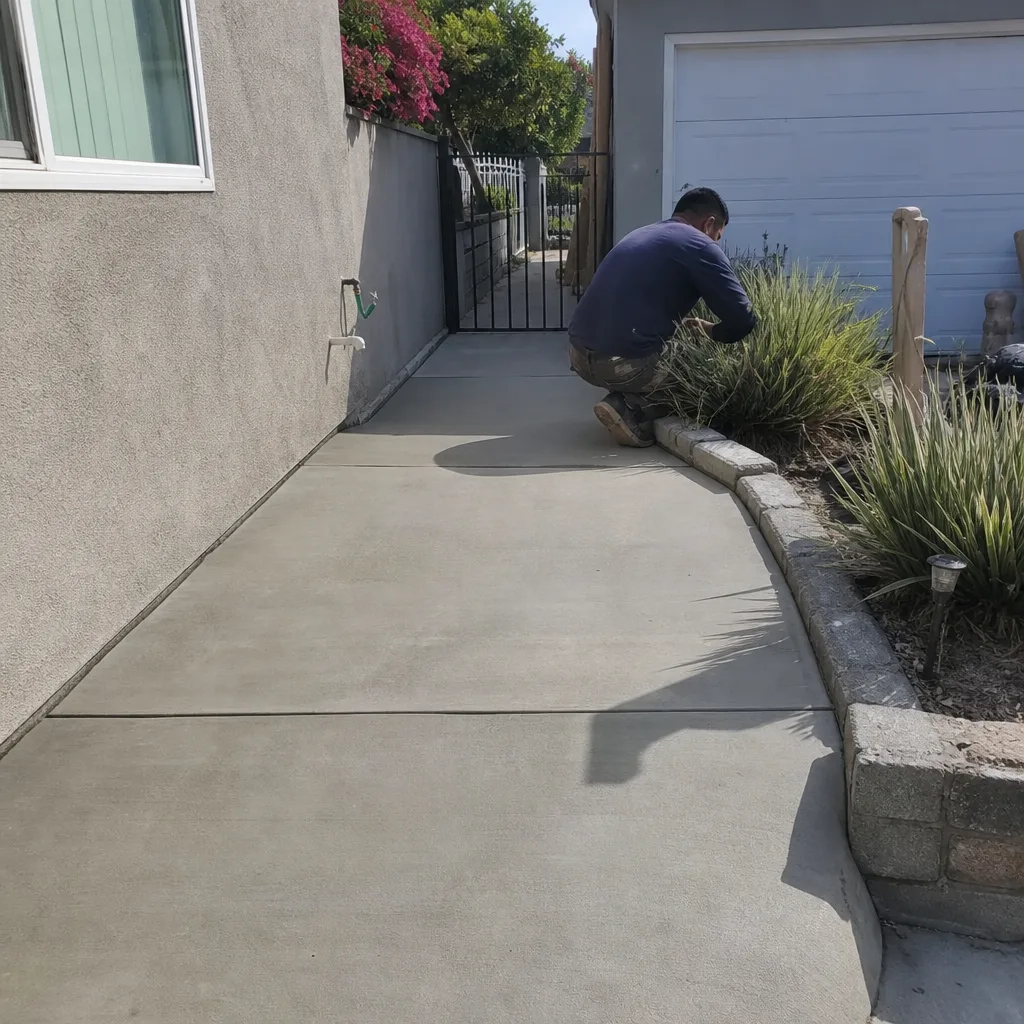 After
AfterCommon Mistakes to Avoid
- Ignoring a slow drain because it still drains. In West Covina’s older homes, slow drains are often the first sign of cast iron pipe buildup or root intrusion. By the time it backs up completely, you’re looking at a much bigger job than a snaking.
- Painting over a recurring ceiling stain. The stain returns because the leak is still there. Paint hides it. It doesn’t fix it. Find the water source first, paint second.
- Caulking a stucco crack without checking what’s behind it. Caulk is a sealant, not a structural repair. Sealing a crack that indicates movement buys you nothing.
- Testing an old electrical panel with a shop vac and a surge protector. Surge protectors don’t protect against a panel failing. Have a licensed electrician look at it. This is one of the few items where the DIY version carries real safety risk.
- Cleaning gutters only when they overflow. By the time a gutter overflows onto the wall, water has already been pooling where it shouldn’t. Clean on a schedule, not on visible failure.
- Filing away a home inspection report from a purchase years ago and never reading it again. That report is a maintenance roadmap. The problems it flagged don’t get better because you stopped looking at the paper.
When to Call a Professional
Call when the problem is structural, electrical, gas-related, or involves water that has entered the building envelope. A crack wider than 1/8 inch, a panel that buzzes or feels warm, any gas smell, stained drywall that’s soft to the touch, a roof leak with visible water on the ceiling, or a crawlspace that smells like moisture after every rain. These are not DIY diagnostic projects. Sawyer Remodel West Covina offers free estimates in West Covina, including maintenance walkthroughs for homeowners who want a professional baseline. Call (341) 217-4204 to schedule yours.
Frequently Asked Questions
Twice a year for the DIY check, and once a year for a contractor walkthrough. For seasonal construction care in West Covina, timing matters. West Covina’s dry summers and wet winters mean your house faces different stresses in each season, so the spring check and the fall check serve different purposes.
In West Covina, a general contractor maintenance walkthrough typically ranges from $150 to $400 depending on home size and whether specialized equipment like a sewer camera is used. Sawyer Remodel West Covina includes a maintenance assessment as part of a free estimate, so there’s no cost to have us look before committing to any work. Call (341) 217-4204 for specifics.
Water management, hands down. Specifically, downspouts and gutters that don’t move water away from the foundation. We see it in nearly every neighborhood in West Covina, and it’s the cheapest item on the list to fix and the most expensive one to ignore.
No. You can see most problems from the ground with binoculars, and walking on a roof risks damage to the roofing material and your own safety. If the roof needs a close inspection, have someone with proper safety equipment do it. The risk-to-reward ratio doesn’t favor a DIY roof walk.
Measure it. A crack narrower than 1/8 inch that doesn’t grow over six months is almost always cosmetic. A crack wider than 1/8 inch, or any crack that’s growing, warrants a professional assessment. Mark the end of the crack with a pencil and the date, and recheck it in six months.
We handle both. The same team that handles full home renovation in West Covina also does smaller maintenance items, from gutter fixes to drywall repair to stucco patching. For larger scope projects, we also bring full bathroom remodeling in West Covina experience under the same written-price, photo-update process. The price is always in writing before work starts, regardless of project size. Call (341) 217-4204 and someone will pick up.
The Bottom Line

West Covina homes speak a language of cracks, stains, and drips. Learn to read it, and most emergencies become routine maintenance items you handle on a schedule instead of at 2 a.m. Walk the exterior and interior twice a year with this checklist. Check the specific items for older homes if yours was built between 1950 and 1980. Document everything with photos. And once a year, have a contractor put eyes on the systems a homeowner can’t easily assess, because that’s where the expensive surprises hide. The goal isn’t to become a home inspector. It’s to make the emergency call the one you never have to make.
For a free maintenance walkthrough or any repair estimate in West Covina, Sawyer Remodel West Covina home is the place to start. Call (341) 217-4204 and get a written price before any work begins.
Written by Luca Romano, Owner at Sawyer Remodel West Covina, serving West Covina since 2005. Browse more guides & resources from our team.